 STRIVESOCK
For a new brand, one of the first questions when sourcing socks is simple: How many pairs do I actually need to order?
The answer is rarely just one number. A private label socks MOQ may depend on the sock style, color, size range, logo method, packaging and how much of the product you want to customize.
This is especially important for new brands. Ordering too much can leave cash tied up in inventory. Ordering too little—or dividing a small quantity across too many colors and designs—can make production inefficient and increase the cost per pair.
The goal of a first order should therefore not be to create the biggest possible collection. It should be to create a focused product range that gives you useful market feedback and can be reordered if it sells.
Quick Answer: What Is the MOQ for Private Label Socks?
MOQ means Minimum Order Quantity. It is the minimum production quantity a supplier can reasonably manufacture for a particular product or production configuration.
For private label socks, the MOQ may be calculated by:
- sock style
- color
- size
- logo or design
- construction
- packaging configuration
For some focused private-label programs, starting quantities may be around 50 pairs per style, color and size combination, depending on the product and level of customization.
But buyers should not assume that every sock can automatically be produced at the same MOQ. A simple existing crew sock with your logo is very different from a completely new performance sock with custom yarns, grip patterns, multiple sizes and custom retail packaging.
The better question is not only “What is your MOQ?” but “What is the MOQ for the exact product range I want to launch?”
Why Do Sock Manufacturers Have MOQs?
A knitting machine does not simply produce one sock at zero setup cost and then continue indefinitely. Before production begins, the factory may need to prepare:
- yarn
- machine settings
- knitting programs
- logo artwork
- color combinations
- sizing specifications
- grip or silicone layouts
- finishing processes
- labels
- packaging materials
Many of these steps require setup whether you order 50 pairs or 500 pairs. Small orders therefore spread setup costs across fewer products. MOQ helps make the production run commercially workable.
For a buyer, understanding this is useful because it shows where you can simplify the first order instead of only negotiating for a lower number.
What Affects Private Label Socks MOQ?
1. Starting From a Base Style vs Developing From Zero
With a private label program, you can often start from an existing or proven sock construction and customize customer-facing elements such as colors, logo, stripes, knit graphics and packaging.
That removes many development variables. A fully custom sock can involve new yarn combinations, cushioning zones, compression structures, dimensions, knitting programs, grip layouts and technical construction.
More development normally means more production complexity. Compare private label socks with fully custom sock development before setting your first-order brief.
2. Number of Colors
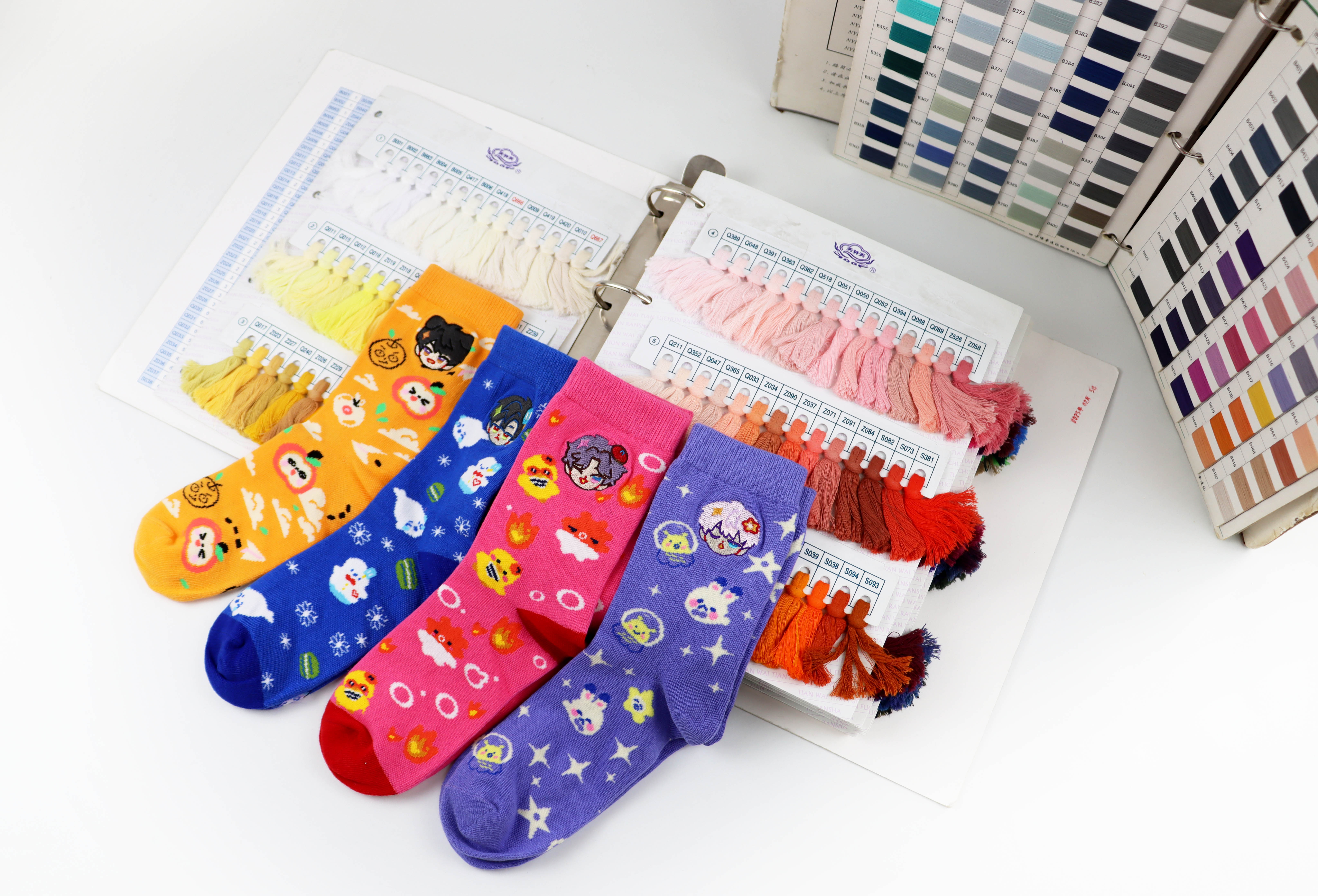
Color is one of the easiest ways for a new brand to accidentally multiply its inventory. If the production minimum is applied to each color, one sock style in four colors can become four separate production configurations.
A new brand rarely needs six or eight colorways immediately. A tighter color story usually makes more sense for the first launch.
For example, Black + Cream may provide more useful sales data than Black + Cream + Green + Blue + Pink + Brown with very shallow stock in every color.
3. Size Range
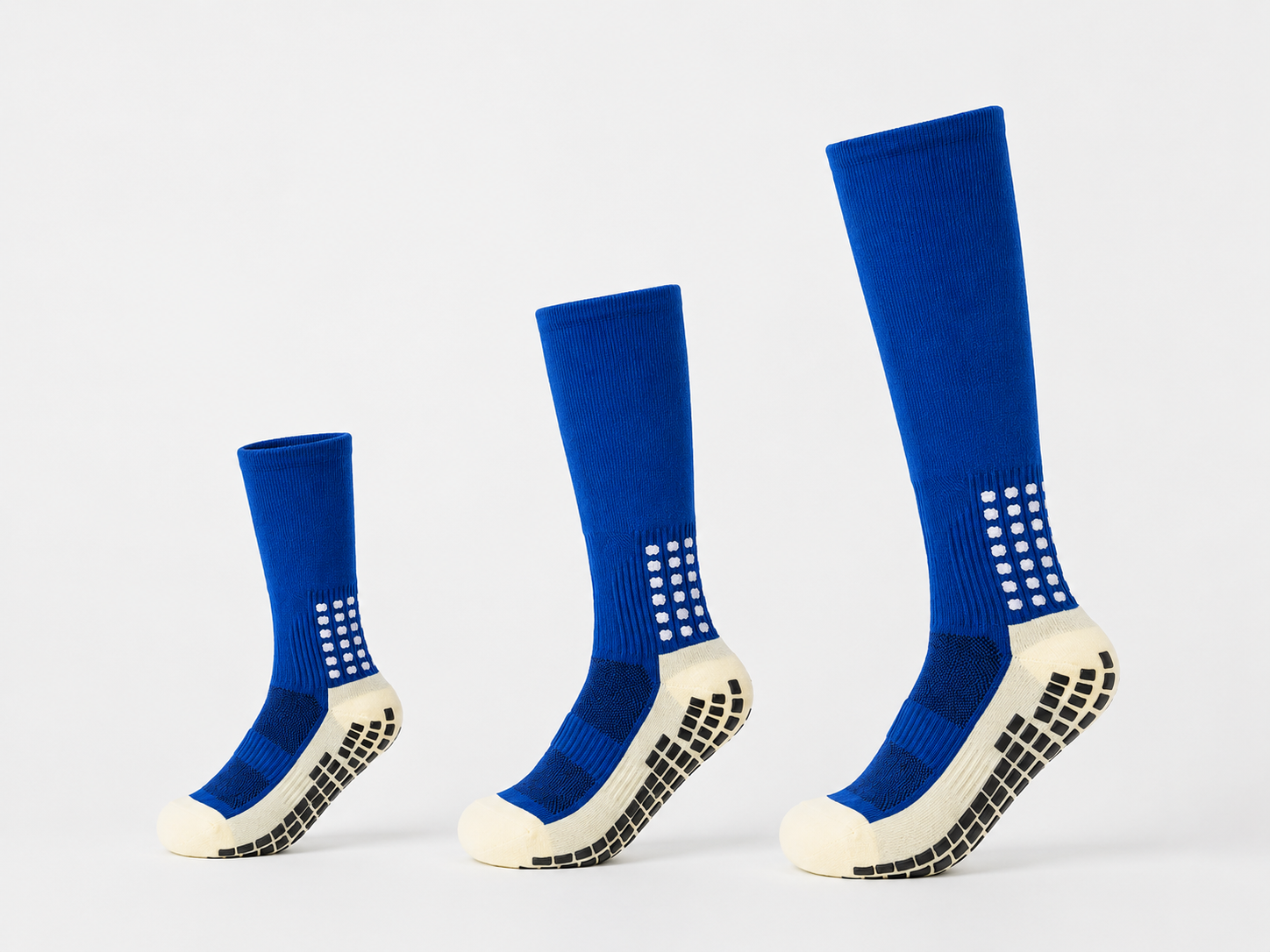
Sizes can also divide the MOQ. Suppose a program requires approximately 50 pairs per style, color and size. A seemingly small range can become a much larger total order once every combination is counted.
This is why buyers should always ask whether sizes can be mixed within an MOQ. Do not calculate your inventory only from the headline minimum. Calculate the total SKU structure.
Use the Sock MOQ & SKU Calculator → Enter your own style, color, size and per-SKU quantities to estimate your full first order.
| Style | Color | Size | Quantity |
|---|---|---|---|
| Essential Crew | Black | S/M | 50 |
| Essential Crew | Black | L/XL | 50 |
| Essential Crew | Cream | S/M | 50 |
| Essential Crew | Cream | L/XL | 50 |
Total: 200 pairs.
4. Logo and Branding Method
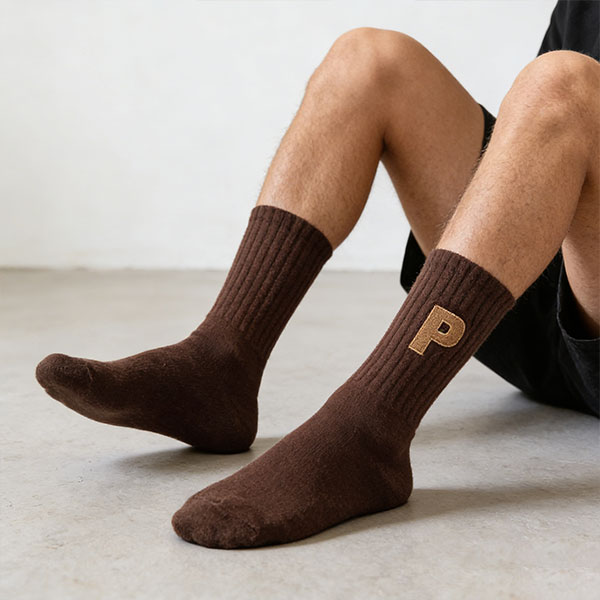
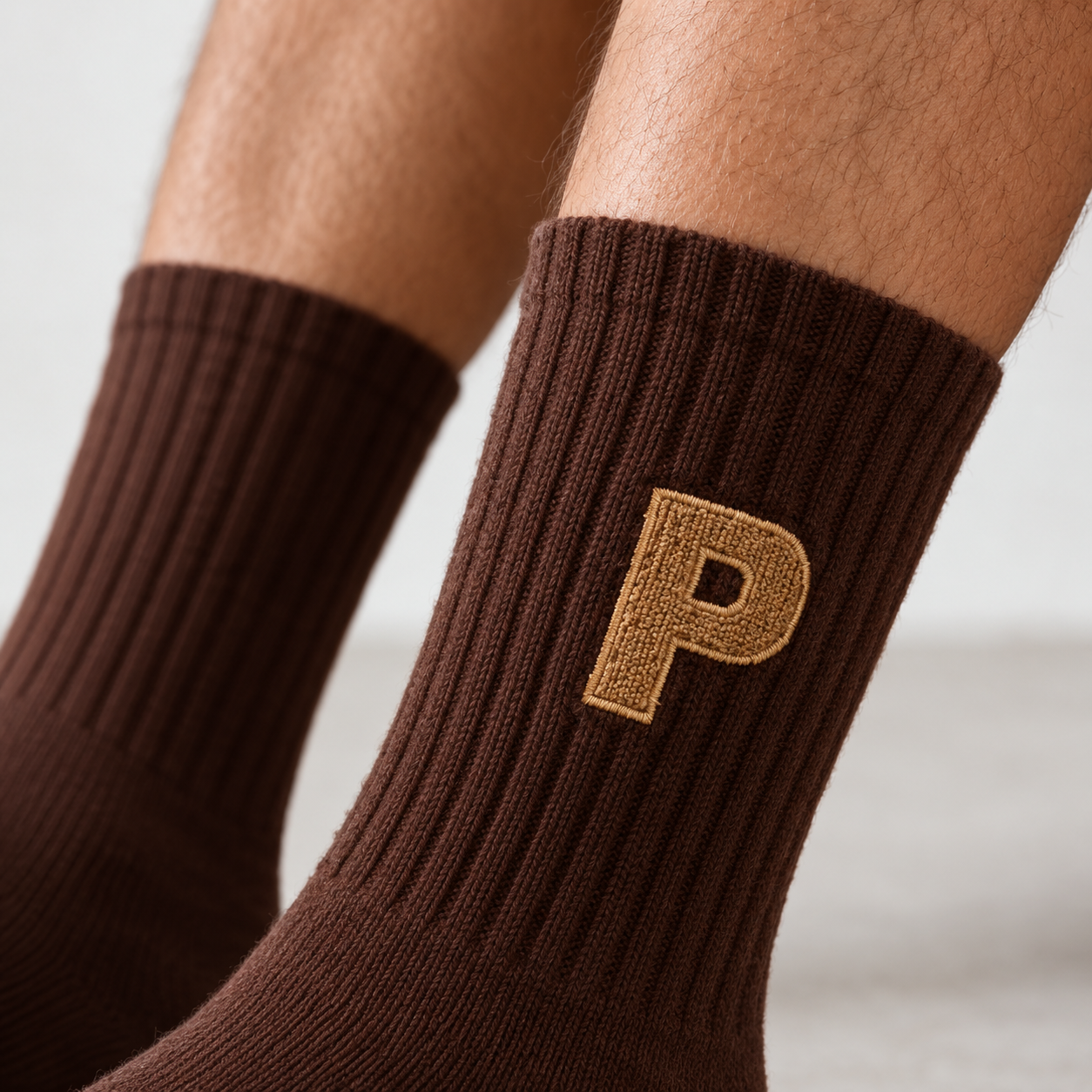
Not every logo is produced in the same way. Depending on the sock and artwork, branding may use a knitted-in logo, jacquard graphics, embroidery, silicone application, printed elements or custom labels.
A simple knit logo on an existing construction may be easier to produce than a complicated multi-color graphic covering a large section of the sock.
Before requesting a quotation, send the supplier your vector logo, preferred logo position, approximate logo dimensions, required colors and a reference image if available.
5. Custom Grip Patterns
Grip socks introduce another variable. A standard grip layout may use an existing production setup, while a completely unique outsole pattern may require a new mold or plate.
Examples include repeating brand initials, custom icons, geometric patterns, brand slogans and proprietary grip layouts.
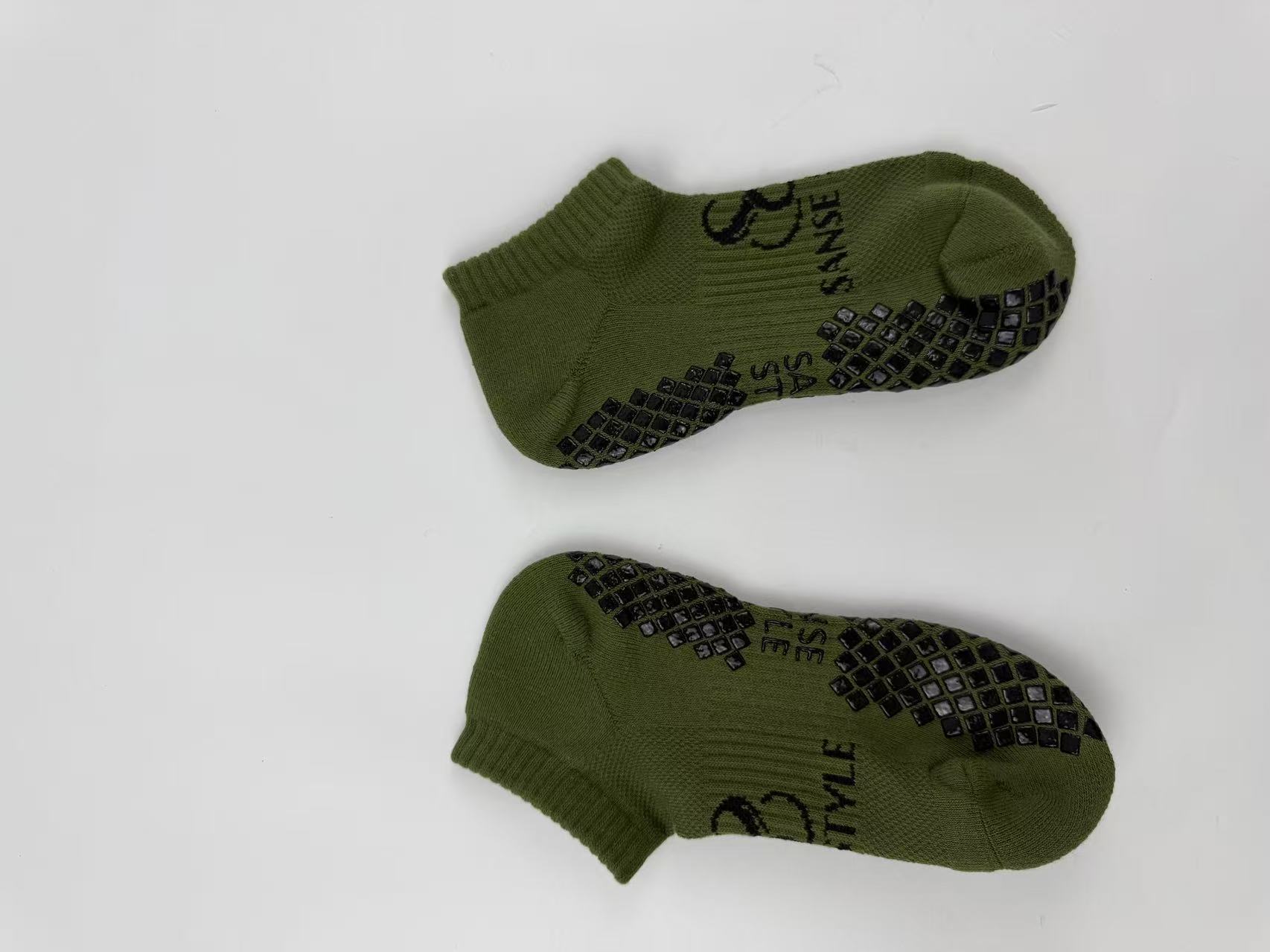
For a new brand, using an existing grip structure while customizing the upper sock can sometimes be a more efficient first step. After demand is proven, the outsole pattern can become more customized. Explore private label grip socks if grip is your starting category.
6. Packaging
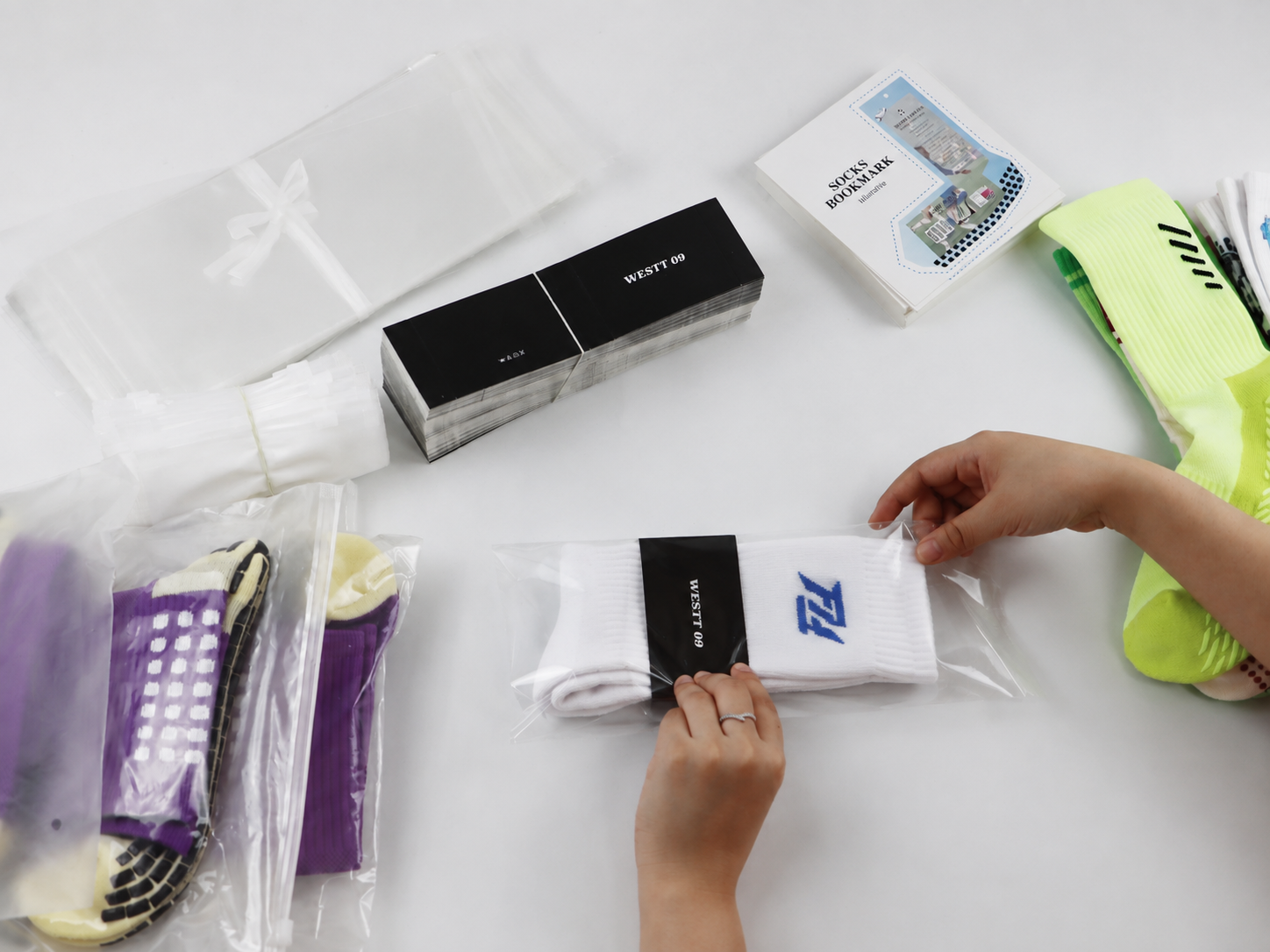
Packaging can have its own MOQ. Your socks may have one minimum while the packaging supplier has another.
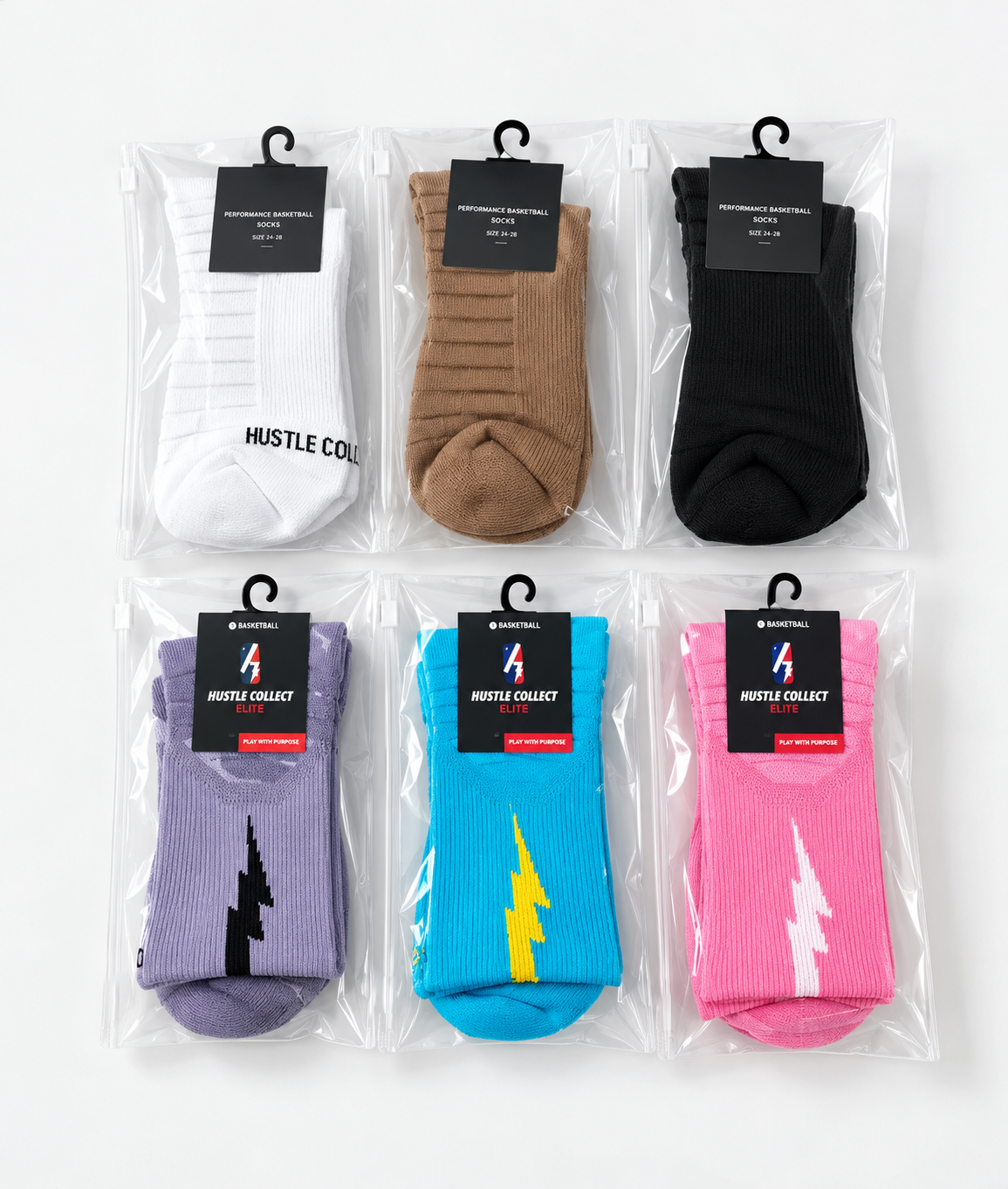
Typical private label packaging includes paper bands, hangtags, poly bags, retail boxes, barcode labels, size labels, SKU labels and carton labels.
For a smaller launch, a branded paper band or hangtag may make more sense than developing a complicated custom box immediately. Later, once sales volume increases, packaging can be upgraded.
Low MOQ Does Not Always Mean Low Total Cost
A lower MOQ reduces inventory exposure, but it does not necessarily produce the lowest unit cost. A small order still needs sampling, artwork preparation, knitting setup, packaging preparation, inspection, packing and international shipping.
Those costs are divided across fewer pairs. So instead of only asking “What is your lowest MOQ?”, also ask: “What quantity gives me a reasonable balance between inventory risk and unit cost?”
50 vs 100 vs 300 vs 500 Pairs: How Should a New Brand Think About Quantity?
There is no universal perfect quantity. But the purpose of each quantity level can be different.
| Quantity | Typical Purpose | Main Consideration |
|---|---|---|
| Around 50 pairs | Very focused product test | Keep SKUs extremely limited |
| 100–200 pairs | Small initial launch | Enough stock to collect meaningful feedback |
| 300–500 pairs | Broader retail or ecommerce launch | More flexibility for colors and sizes |
| 500+ pairs | Proven products or larger programs | Better opportunity to optimize unit economics |
The key is not simply ordering more. It is making sure the inventory has enough depth per SKU. Launching 500 pairs divided between 20 combinations may sometimes be less useful than launching 200 pairs concentrated into four strong combinations.
The Hidden Problem: Too Many SKUs
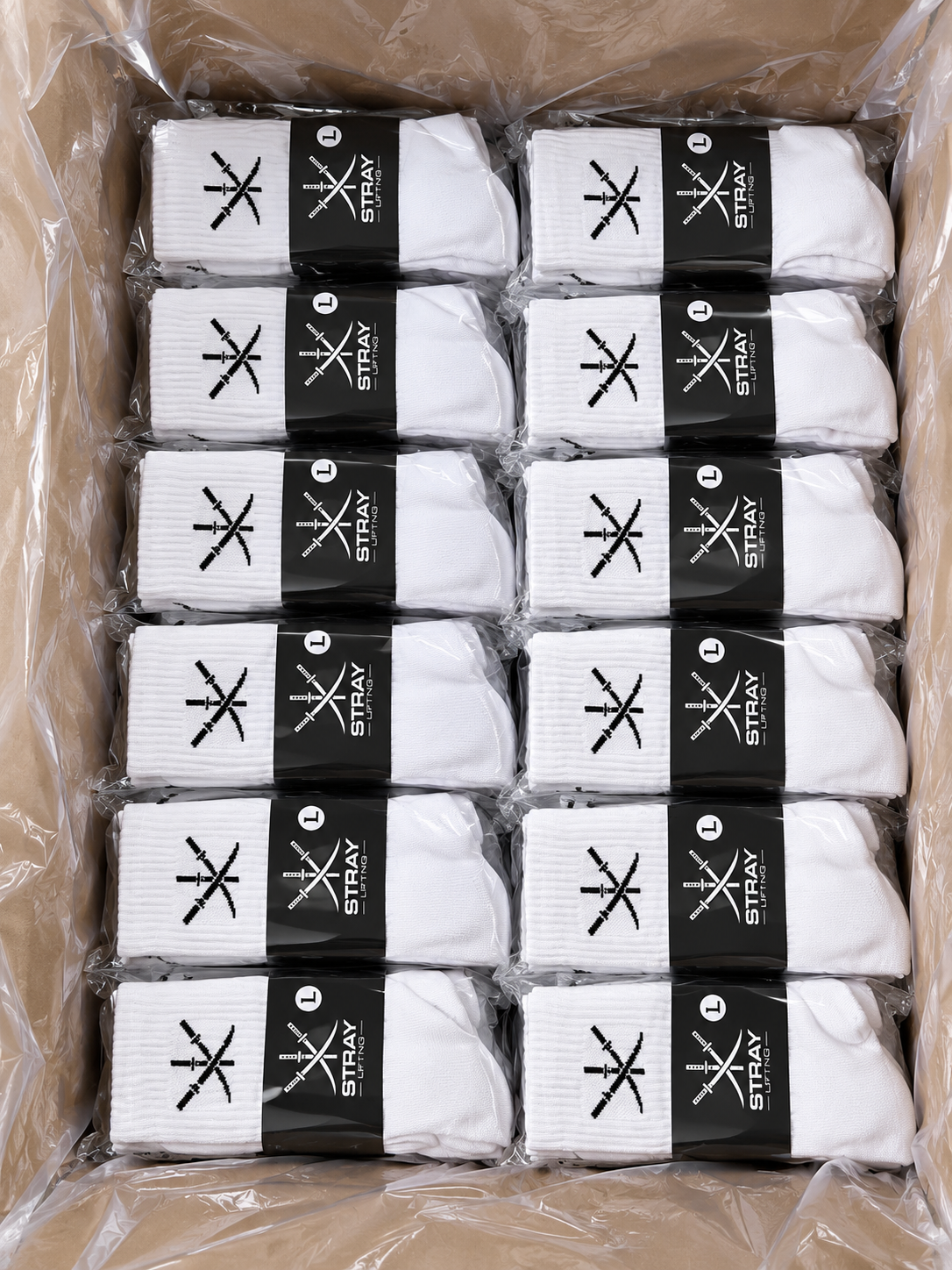
Suppose you want 3 sock styles, 4 colors and 3 sizes. That creates:
3 × 4 × 3 = 36 SKUs
Even before packaging variations are considered, 36 SKUs can create problems with:
- inventory forecasting
- photography
- ecommerce listings
- barcode management
- packaging
- warehousing
- reorder planning
A smaller first collection gives you cleaner data. Instead of asking customers to choose from everything, you discover which products actually deserve expansion.
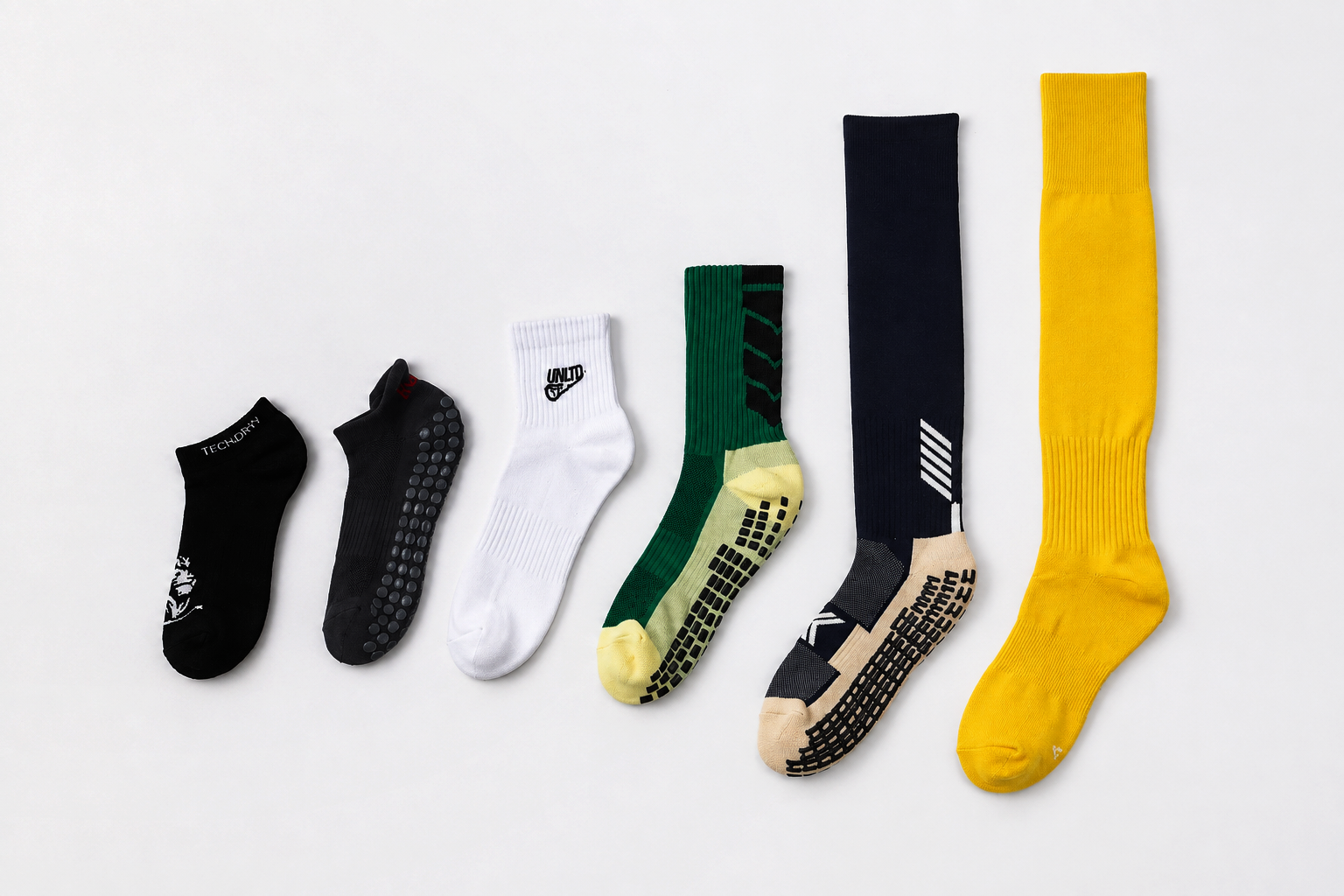
A Better First-Order Strategy for New Sock Brands
Step 1: Choose One Main Customer Need
For example: everyday lifestyle socks, running socks, training socks or grip socks. Do not try to serve every customer segment with the first production order.
Step 2: Start With 1–3 Base Styles
Select styles that already match the type of customer you want to reach. A focused assortment is easier to test, photograph, merchandise and reorder. See the StriveSock base styles and collections for product directions.
Step 3: Limit the First Color Story
Choose one or two commercially useful colors before expanding into seasonal colorways.
Step 4: Keep Packaging Practical
Start with packaging suitable for the channel you are actually selling through. An ecommerce launch may have different packaging needs from a boutique retail program.
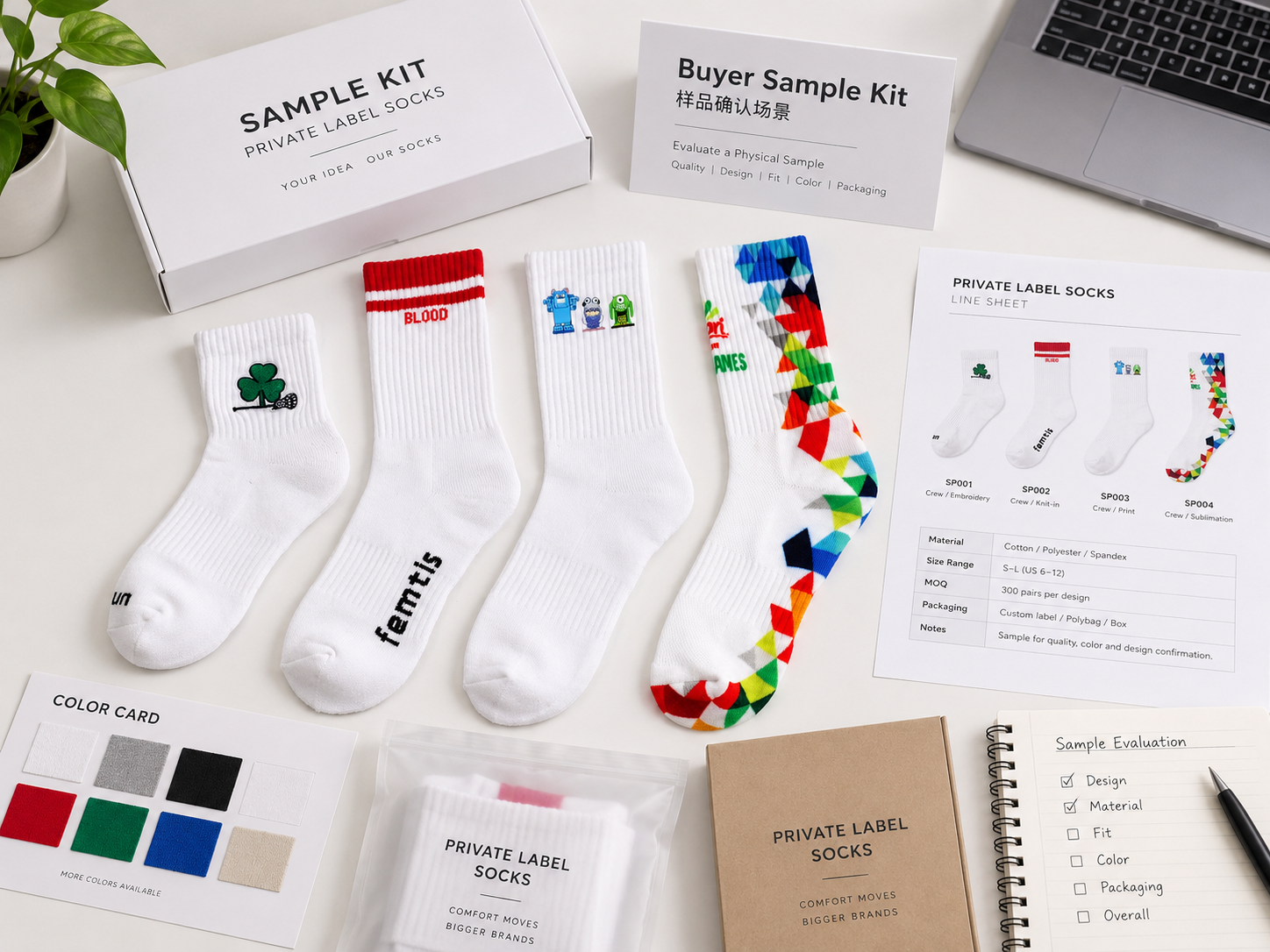
Step 5: Evaluate a Physical Sample
Review fit, hand feel, knitting, logo placement, color, finishing and packaging before committing to bulk inventory.
Step 6: Plan the Reorder Before the First Order
Ask yourself: If this product sells, can I reorder the same specification? The first production order should become the first version of a repeatable product, not an isolated purchase.
What Should You Ask a Private Label Sock Supplier?
- Is the MOQ per style, per color, per size or per design?
- Can different sizes be mixed within the minimum?
- Can colors be mixed?
- Does custom packaging have a separate MOQ?
- Are there setup or mold charges?
- What does the sample include?
- Can I approve a physical sample before bulk production?
- What happens when I reorder the same product?
- Can I add new colors later?
- What information do you need to provide an accurate quotation?
A supplier that only gives you one MOQ number without understanding your product, SKU structure and packaging requirements may not yet have enough information to quote the project accurately.
Private Label or Fully Custom: Which Route Needs the Lower Starting Commitment?
For most new brands, private label is the simpler route. Private label starts from an existing product direction and concentrates customization around the brand-facing details. Fully custom development is more appropriate when the actual product needs to be changed substantially.
Private Label
- existing crew construction
- your brand colors
- knitted logo
- custom paper band
This is mainly a branding and merchandising project.
Fully Custom
- unique sock height
- different compression zones
- proprietary yarn blend
- custom cushioning
- new grip construction
- completely new fit
That is a deeper product-development project.
When Should You Increase Your Order Quantity?
Increase quantity because you have learned something—not simply because a larger order offers a lower price per pair. Useful signals include:
- one style consistently outsells others
- certain colors repeatedly sell out
- customers are asking for restocks
- retailers want repeat supply
- sales history makes demand easier to forecast
- you are confident about fit and sizing
- packaging no longer needs major changes
At that point, larger production quantities can support better inventory planning and potentially better unit economics.
Start → Validate → Reorder → Expand → Scale
FAQ: Private Label Socks MOQ
What is a typical private label socks MOQ?
There is no single MOQ that applies to every sock. Minimum quantities depend on construction, color, sizing, branding, packaging and whether you are using an existing base style or developing a new product. Some focused programs may be able to begin around 50 pairs per style, color and size combination, subject to the final specification.
Is 50 pairs considered a low MOQ for private label socks?
For commercial sock production, approximately 50 pairs for a defined configuration can be considered a small test quantity. Buyers should confirm exactly how the supplier calculates the MOQ.
Can I mix different colors within the MOQ?
Sometimes, but not always. Different yarn colors may require separate production setups, so each color may have its own minimum. Always confirm color splitting before calculating your final order quantity.
Can I mix sizes?
Size mixing depends on the product and production program. Ask whether the minimum applies to the overall style or to each individual size.
Does packaging have a separate MOQ?
It can. Printed bands, hangtags, boxes and other packaging components may be produced by different processes and therefore have separate minimum quantities.
Should I order samples before bulk production?
For a new private-label product, physical evaluation is strongly recommended. Review the sock construction, fit, branding, colors and packaging direction before approving a bulk production run.
Can I reorder the same sock later?
A well-managed private label program should be designed with repeat production in mind. Keep an approved specification covering materials, dimensions, colors, logo placement and packaging so successful products can be reordered more consistently.
Start Small. Learn Faster. Scale What Works.
MOQ should not be treated only as a factory requirement. It is also an inventory-planning decision.
For a new sock brand, the best first order is usually one that is large enough to test real demand but focused enough to keep inventory manageable.
Start with a clear product. Limit unnecessary SKUs. Approve the product before bulk production. Then use actual sales data to decide what deserves the next investment.
Compare the program with a real product direction: review low MOQ private label socks and see how the route applies to private label grip socks.
← Back to Blog