 STRIVESOCK
Reduce unwanted movement
Heel geometry, arch tension and sizing work together to keep the sock positioned inside the shoe.
Build a running sock around footwear, distance, climate and fit—not a generic sports label. Define the functional zones first, then add branding and retail presentation.
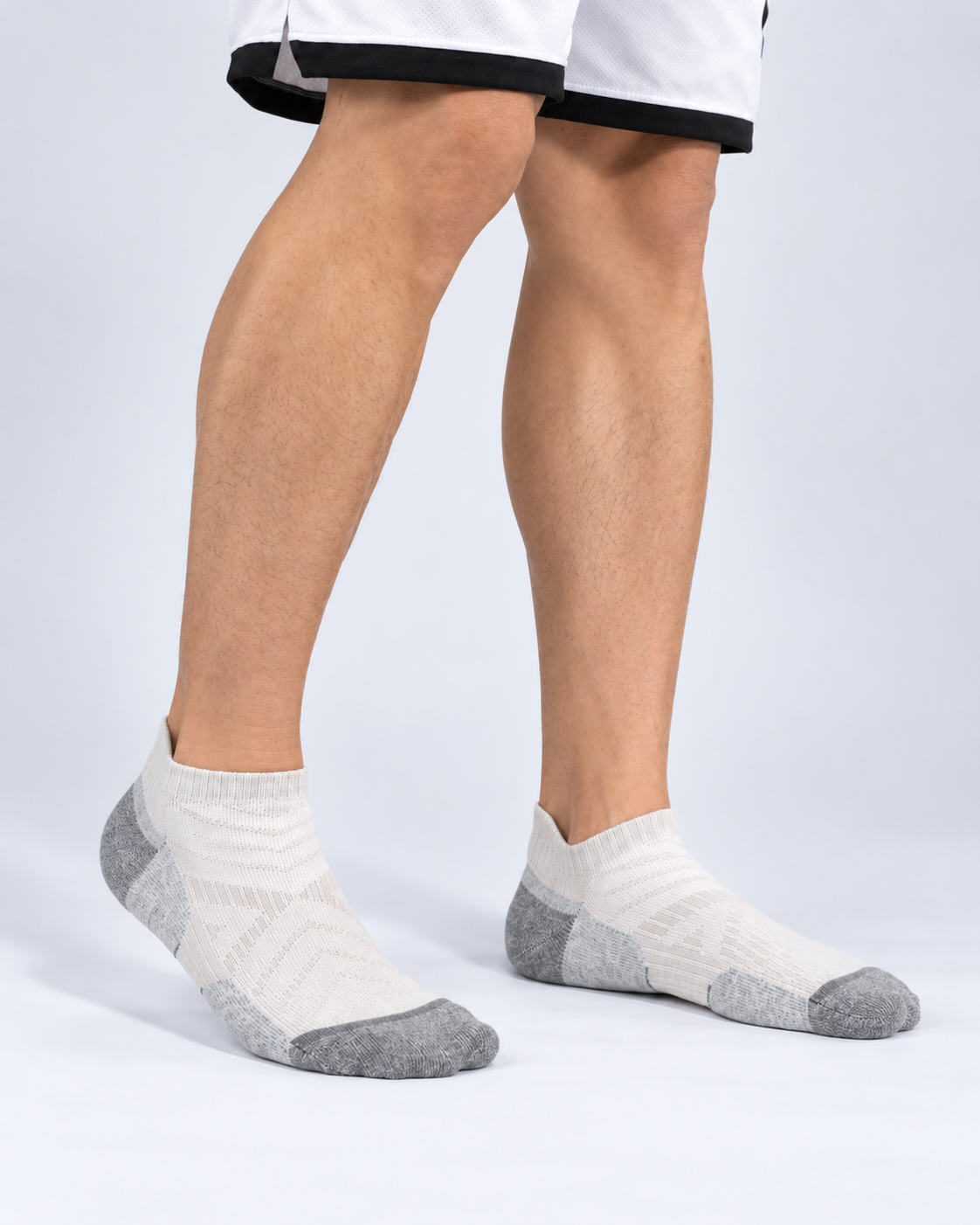
The specification should reflect how long the sock is worn, the shoe volume, climate and the runner's expectation of cushioning.
Heel geometry, arch tension and sizing work together to keep the sock positioned inside the shoe.
Mesh and yarn decisions should support moisture movement without weakening high-stress areas.
Map heel and forefoot cushioning to balance protection, shoe fit and ground feel.
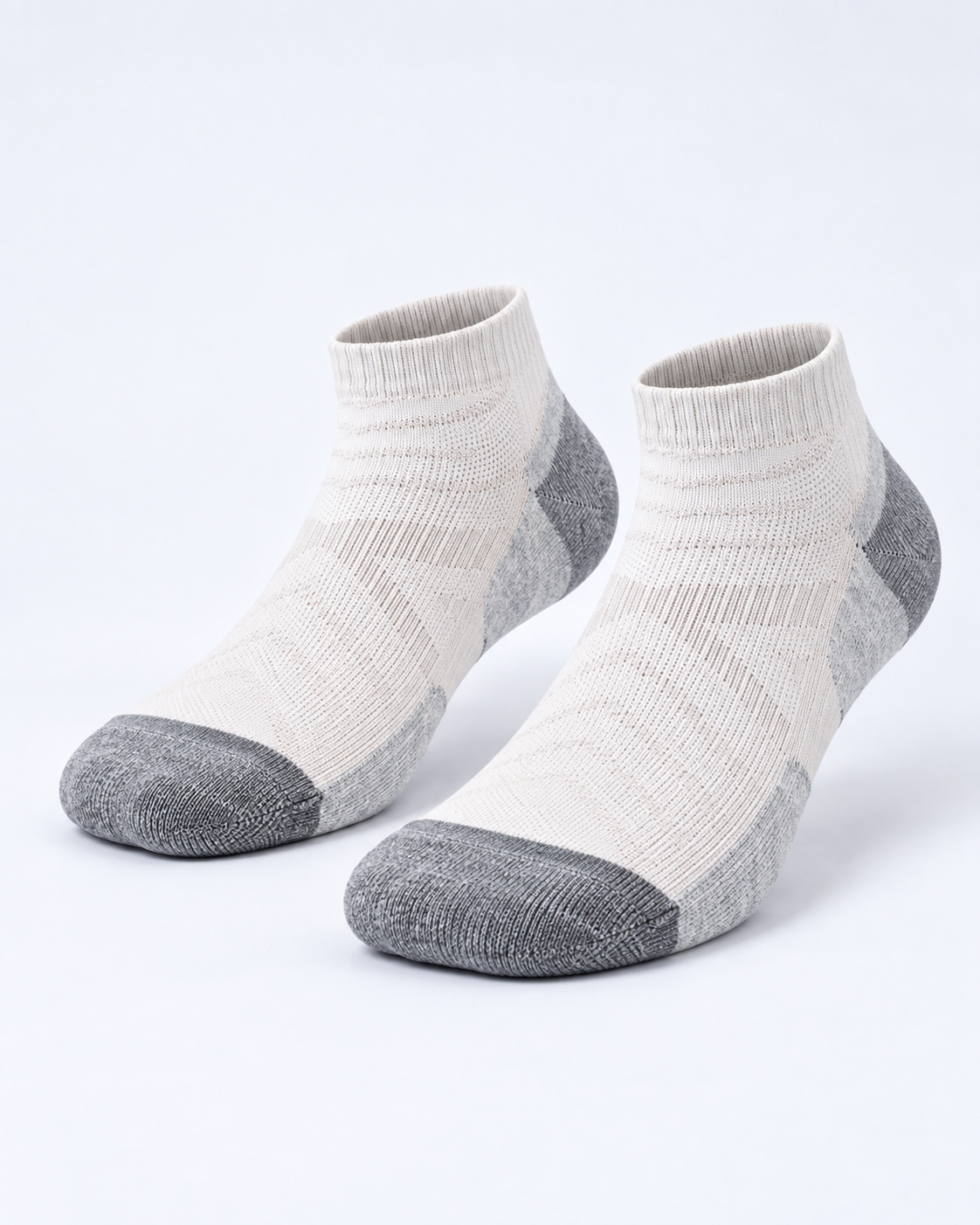
Use these pages to distinguish running needs from broader training or grip applications.
Share the target runner, footwear, length, cushioning and brand direction.