 STRIVESOCK
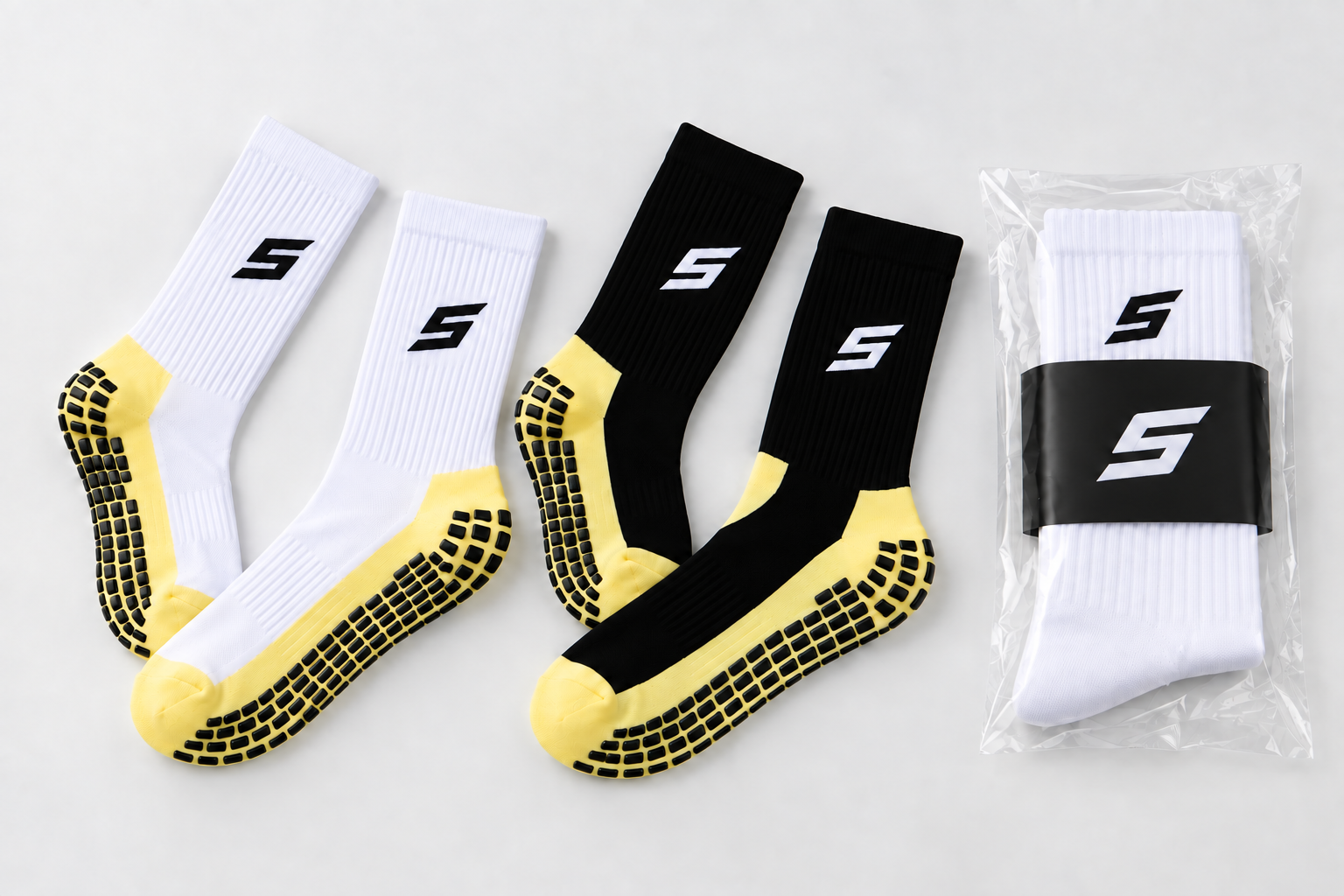
The client wanted to develop a premium football grip sock around a defined performance brief rather than simply customize an existing colorway. It was a fully custom sock development project: the construction and fit had to work inside football boots, while the branding, sole grip and packaging had to work together as a retail product.
Customer Background
Our client was a growing independent football performance brand based in the UK. The founder had a logo, color direction and a clear visual idea for the brand's first football grip sock, but had not previously developed a knitted performance sock.
The goal was a product suitable for both training and match use, with custom knitted branding, a custom sole grip pattern and retail-ready packaging. Instead of placing a large production order immediately, the client chose to make a physical sample, test it inside football boots and refine the details before production.
The Initial Product Brief
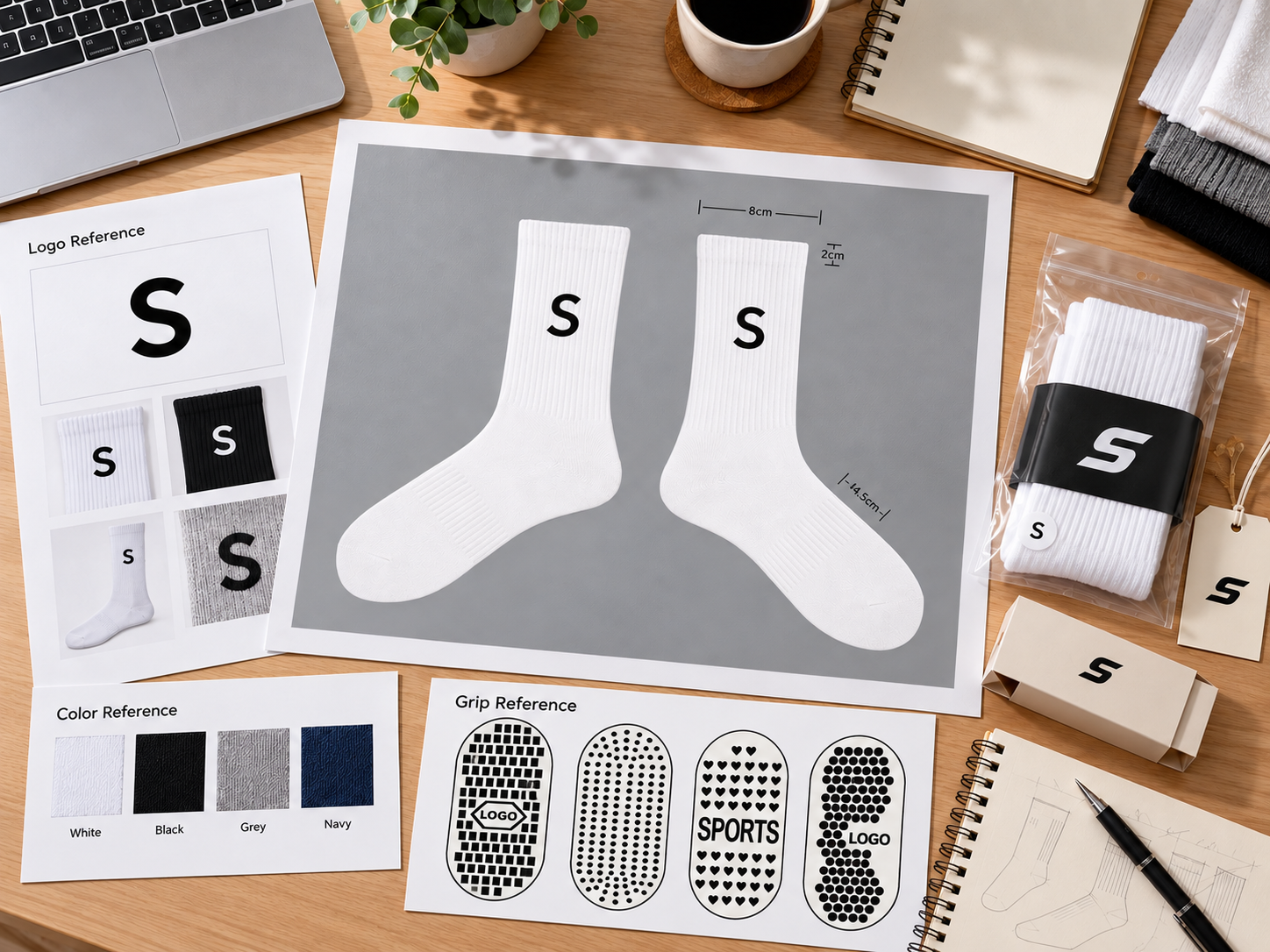
The initial direction was clean and performance-focused: a custom knitted logo, two colorways, branded sole grip, supportive construction and custom packaging. The client supplied logo artwork, a grip reference, packaging direction and color choices.
Those references still needed to become a product that could be knitted and worn. For brands starting with a technical base, private label athletic socks can help frame the performance requirements; Performance Crew 01 is a useful reference for fit, cushioning, support and construction.
The First Sample Revealed Four Important Problems
The first physical sample made the gap between artwork and real use clear. The team reviewed grip coverage, thickness inside the boot, branding position and yarn color separately instead of making a vague request to make the sock “more premium.”
1. The Grip Pattern Was Too Dense
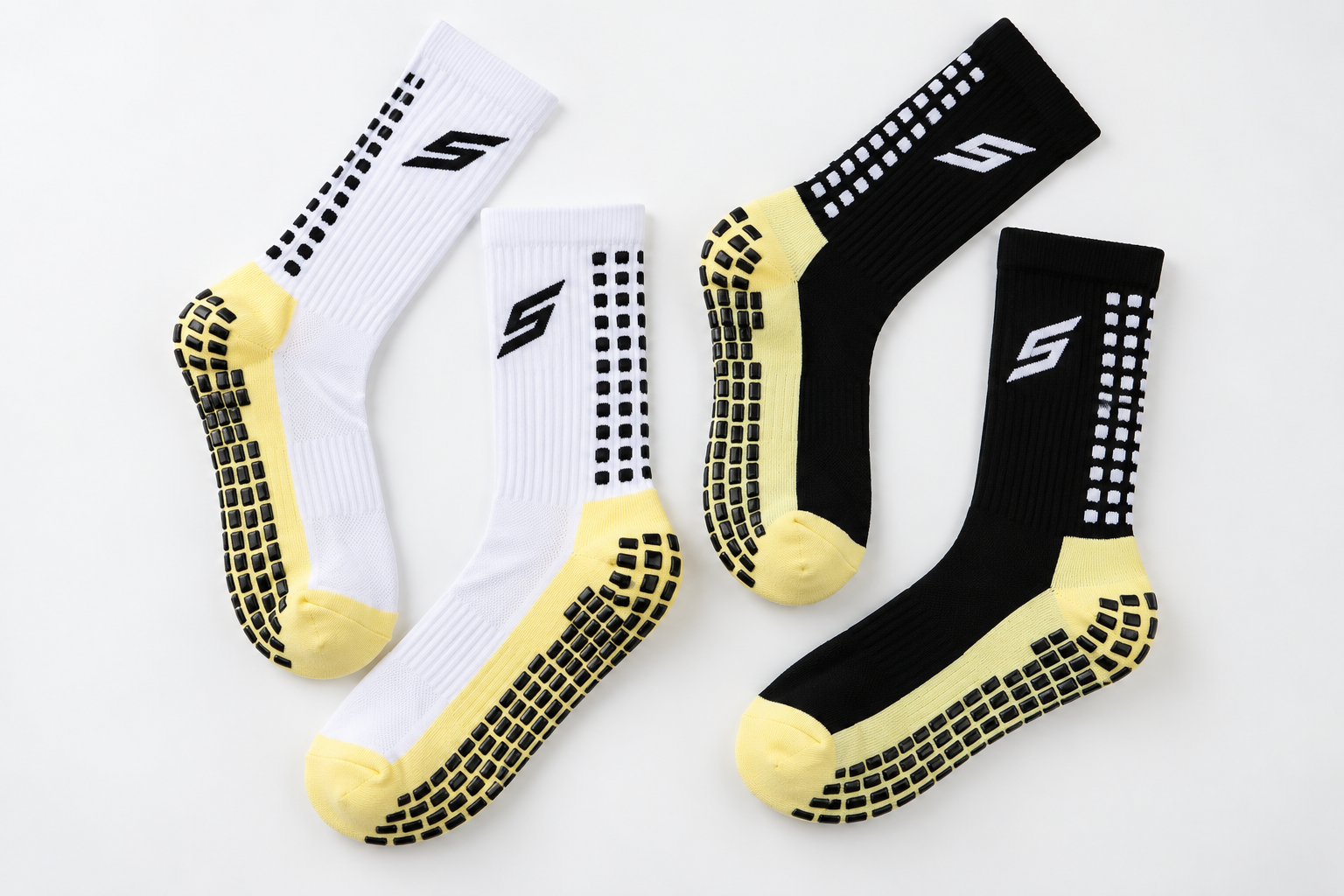
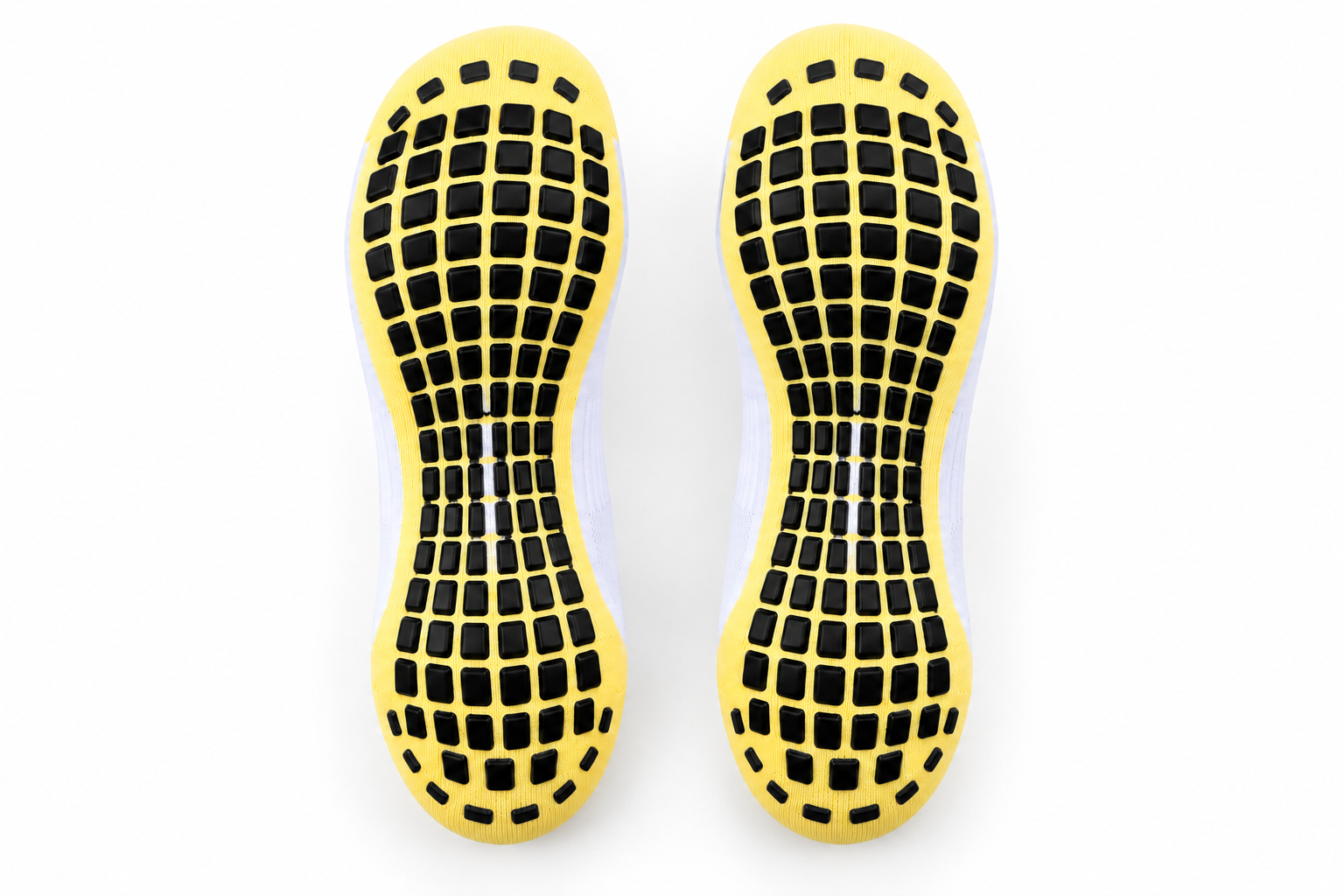
The client initially requested extensive coverage across almost the entire sole. On the first sample, the grip made the footbed feel heavier and less flexible than intended, with tight spacing between elements. The layout was reviewed by zone: element size, spacing, the arch area and the balance between forefoot and heel were adjusted.
2. The First Sample Felt Too Thick Inside the Boot
A premium cushioned feel sounded right in the brief, but the first wear test showed that the footbed felt too thick in a fitted football boot. Terry thickness, forefoot thickness and cushioning in selected areas were reduced. The target was cushioning where needed, with a closer performance fit.
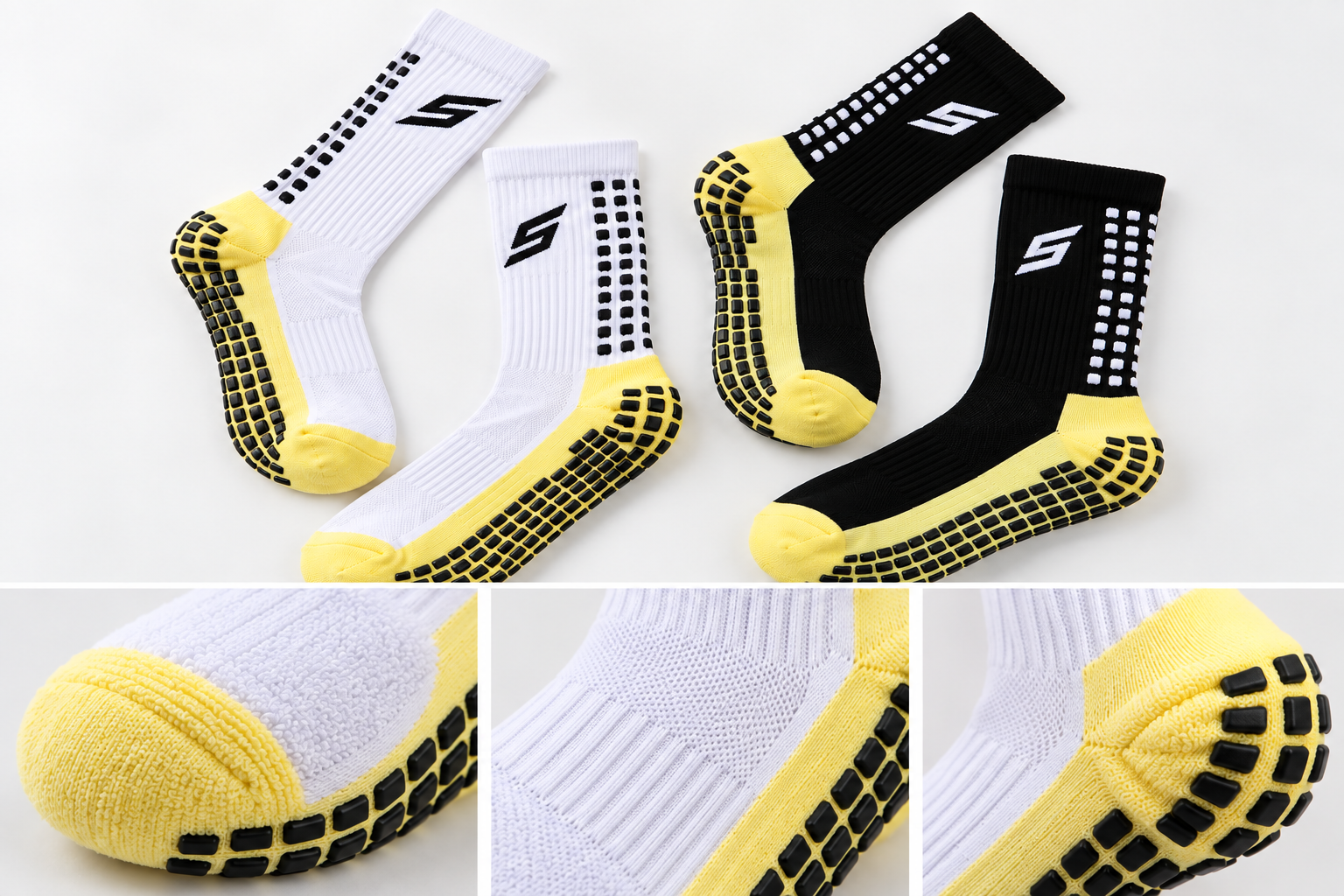
3. The Logo Position Looked Different When Worn
The position looked right on the design drawing, but the physical sock showed that the mark sat too high on the ankle and could be hidden by a boot or compression sleeve. The logo was moved approximately one inch lower for the second sample so it stayed visible when worn.
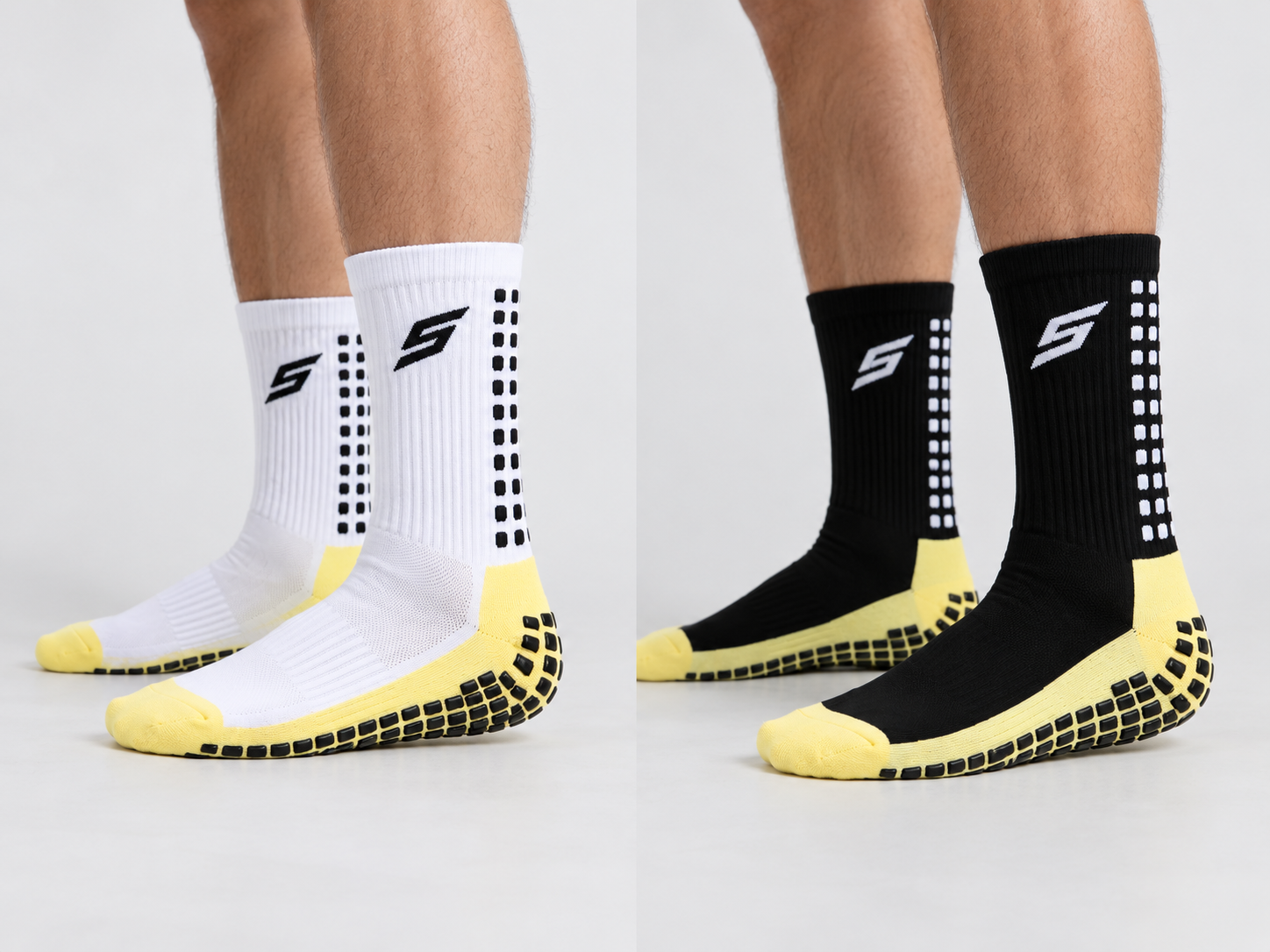
4. The Yarn Color Needed Refinement
The original yarn choice appeared darker than the visual reference and did not coordinate with the packaging direction as expected. The yarn color was reviewed again against the approved reference for the next sample, helping the sock and packaging read as one branded product.
Reviewing the First Sample
The first sample was reviewed using actual product photos, physical measurements, wear testing inside football boots, logo placement and grip coverage. Each observation became a defined revision before the second sample was made.
- Brief
- First sample
- Wear test
- Revision
- Second sample
- Approved sample
- Production
Want to evaluate construction before developing your own version? Request Sample Kit and review fit, finishing, branding and packaging in person.
Second Sample Development
The second round was based on specific first-sample feedback: move the logo approximately one inch lower, reduce grip density and revise spacing, reduce cushioning in selected areas, and fine-tune yarn color. These were product-development changes, not cosmetic edits.
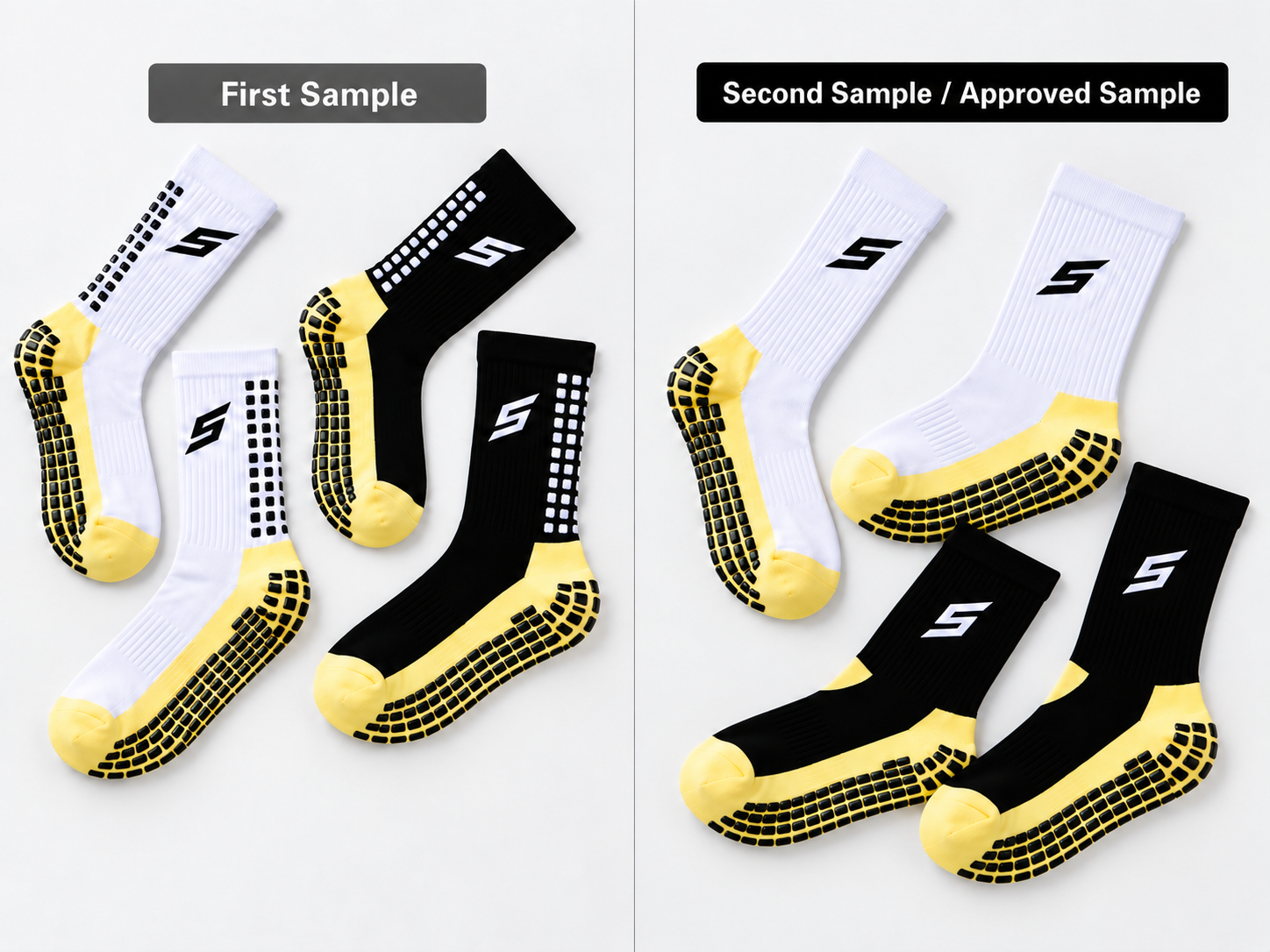
From First Sample to Approved Sample
The second sample was checked against the agreed changes. The logo sat correctly when worn; the revised grip retained useful sole coverage without excessive rigidity; the sock felt slimmer inside the boot while keeping cushioning where needed. Color and packaging presentation were confirmed together.
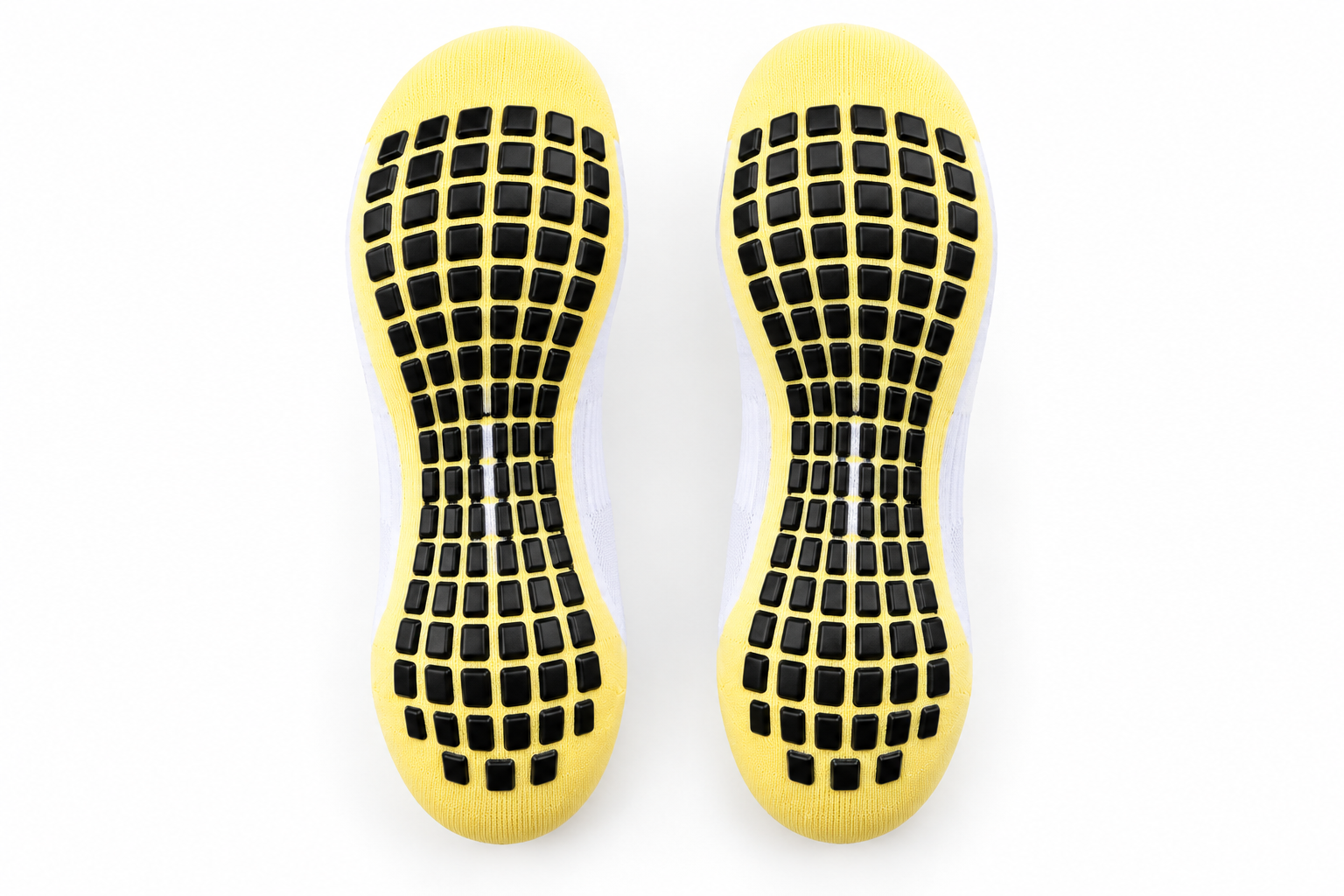
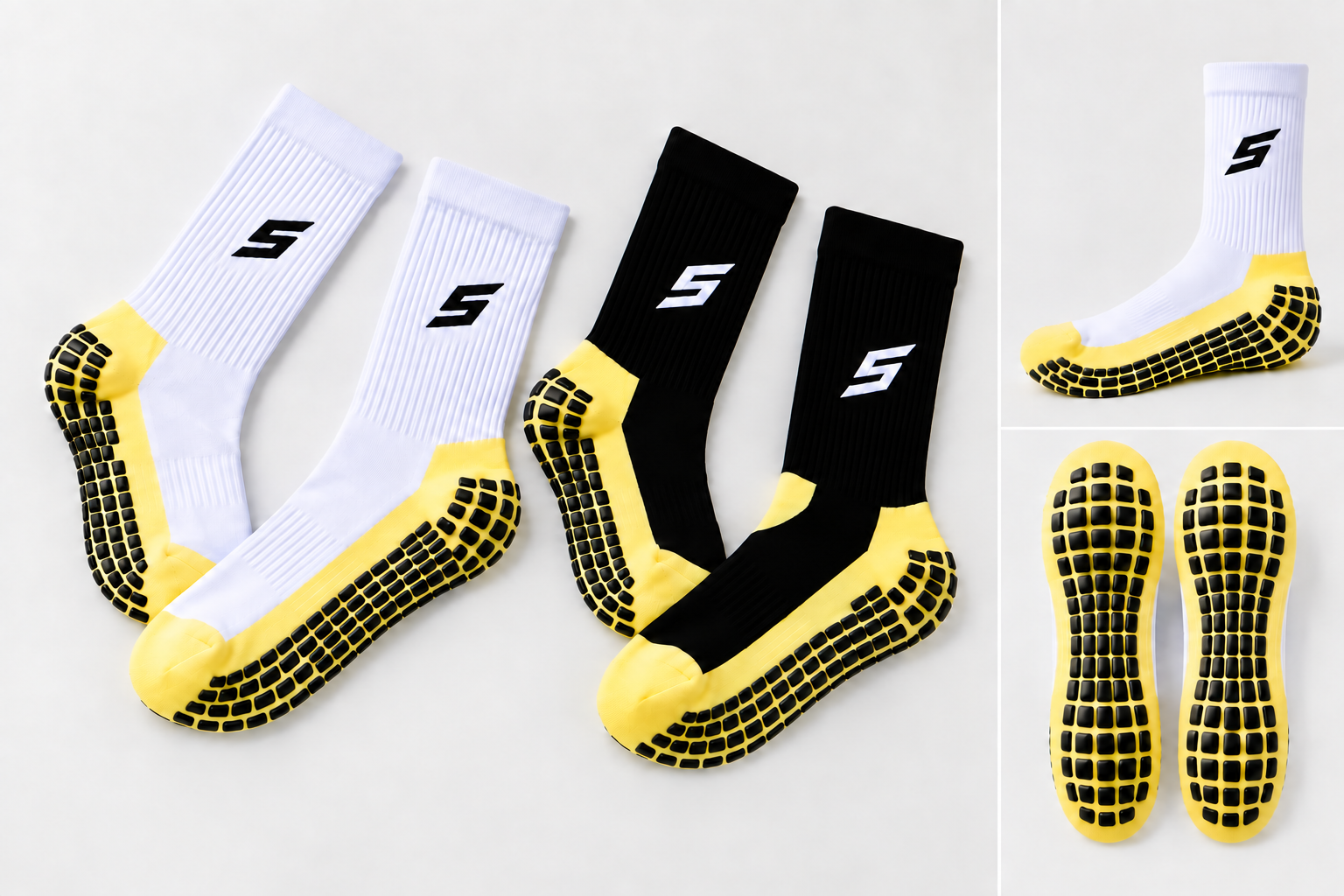
Logo position, fit, grip, color and packaging were now documented as the approved sample specification.
Preparing for Production
The approved physical sample became the reference for production. Alongside the design file, it represented expected construction, dimensions, branding position, grip layout and overall appearance. The main QC checkpoints were sock length, foot length, logo location, grip alignment, color consistency and packaging. This same approved-sample logic informs sock manufacturing and quality-control planning for other branded programs.
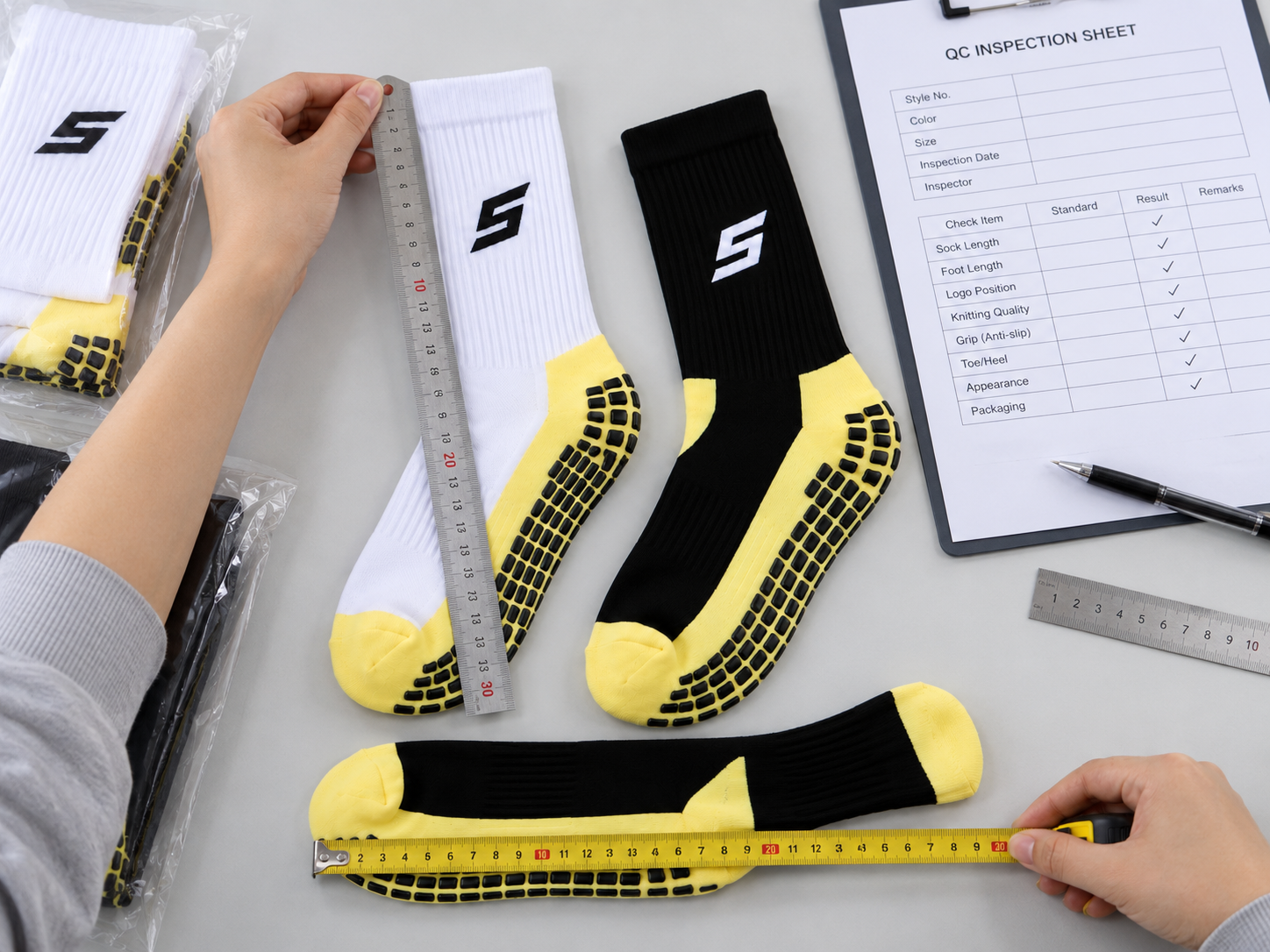
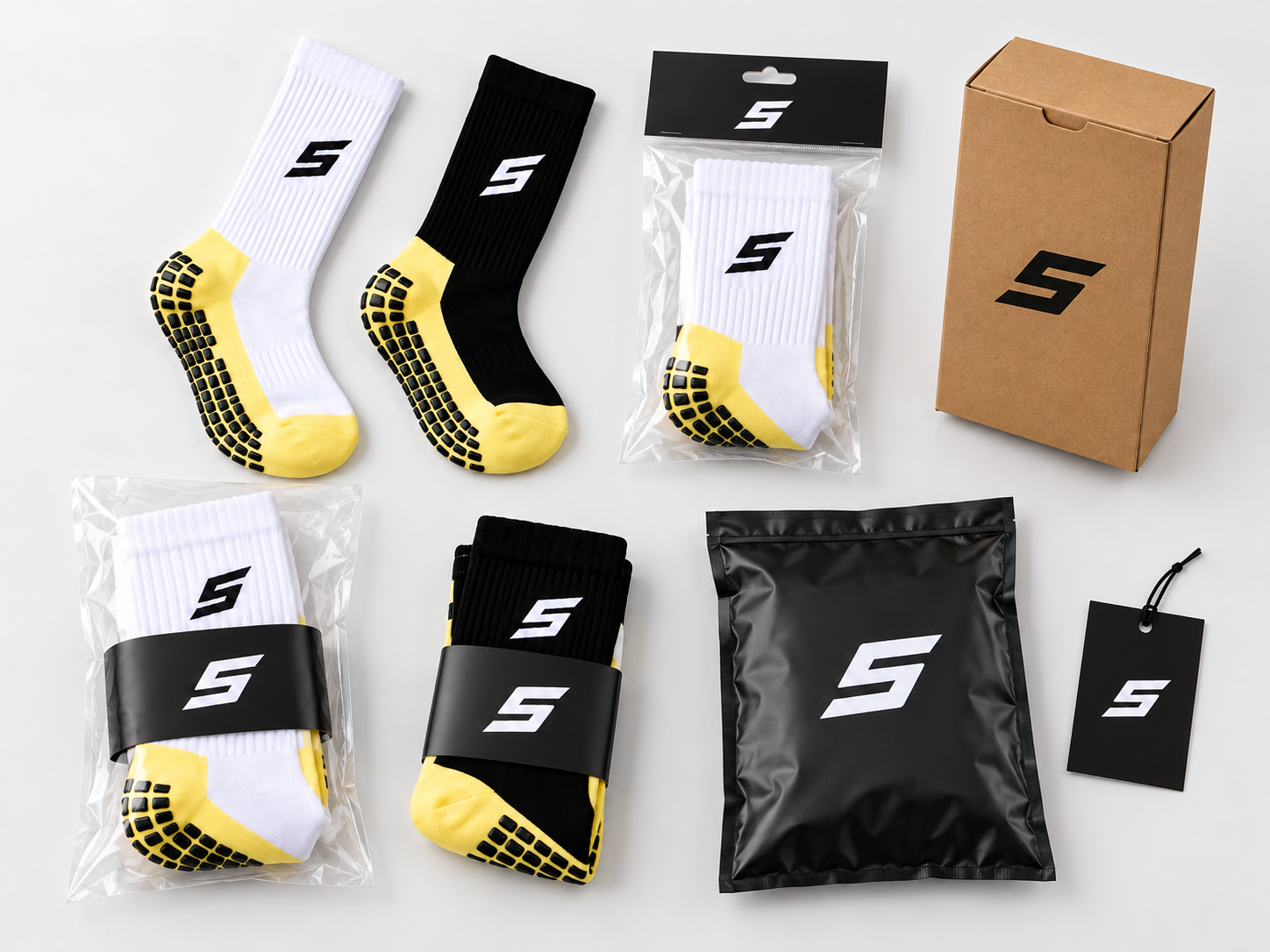
The same approved specification can support repeat orders without rebuilding the product requirements from the beginning.
The Final Result
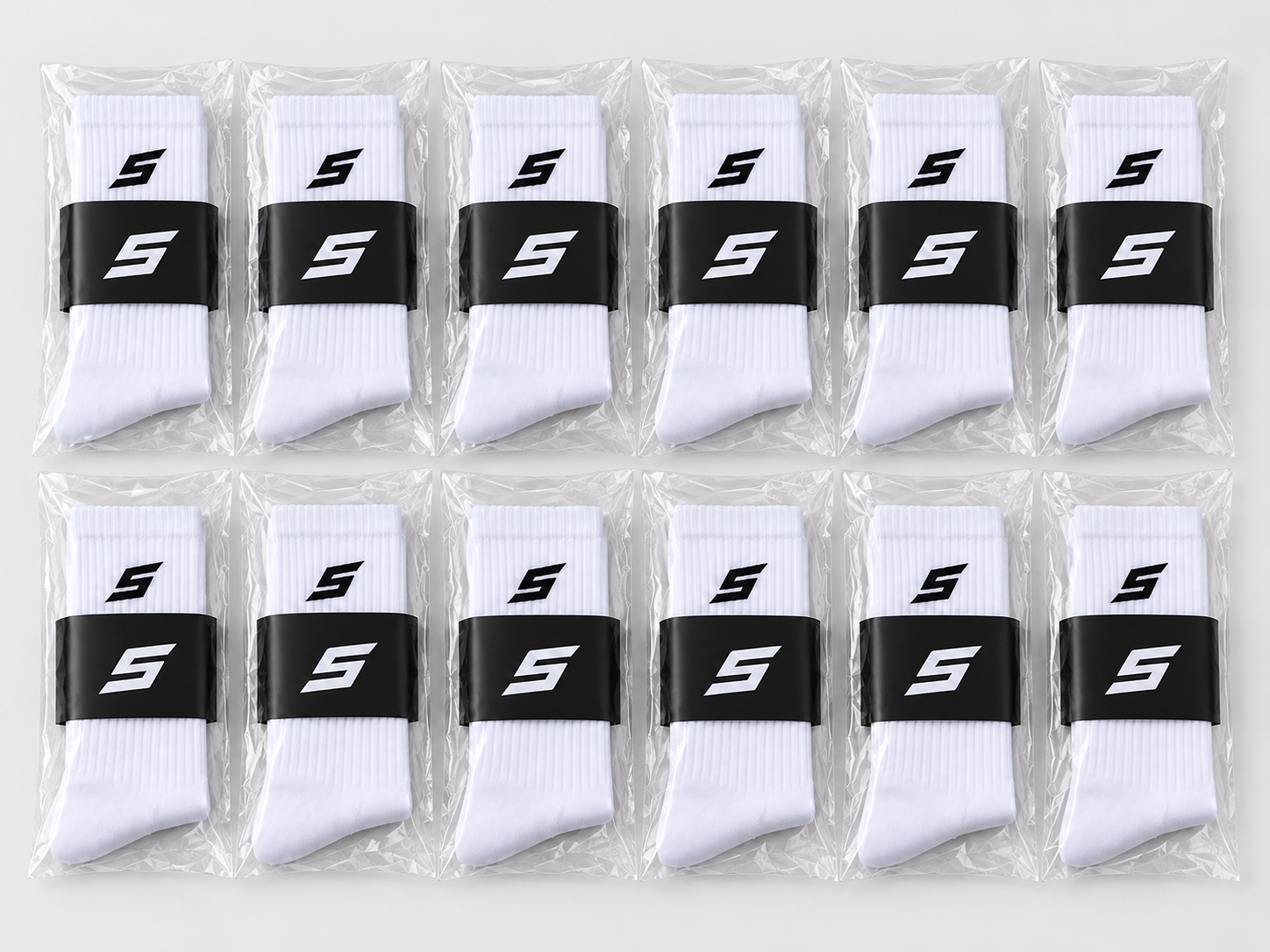
After two development rounds, the final football grip sock specification was approved for production. It included corrected logo placement, more balanced grip, reduced bulk inside football boots, refined yarn color, retail packaging and a repeatable QC reference.
What the Project Demonstrated
Sampling exposed details that a digital concept could not settle. Logo placement changed when the sock stretched on the leg; grip affected flexibility; cushioning that sounded premium felt too bulky in a boot; and yarn color read differently from screen color. A physical test turned those observations into a clearer production specification before a full order.
See more Fully Custom development options, or explore the wider performance collection for product directions that may be suitable as starting points.
Developing Your Own Football Grip Sock?
If you have a logo, reference image or initial concept, share your preferred colors, grip direction, intended use and estimated quantity. We can begin with a product brief and refine the details through sampling before production approval.
Start Your Project →Request Sample Kit