 STRIVESOCK
If you are planning to launch a sock brand, one of the first questions is usually:
How much do private label socks cost?
The short answer is: there is no single price per pair that applies to every private label sock project.
The final cost depends on several factors, including:
- sock style
- material
- construction
- order quantity
- number of colors
- size range
- branding method
- grip or technical features
- packaging
- sampling
- shipping
A basic private label crew sock using an existing construction will normally be priced very differently from a technical performance sock with cushioning, mesh zones, custom grip and retail packaging.
For a new brand, the better question is not simply: “What is your cheapest price per pair?”
What product specification gives me the right balance between product quality, inventory risk and landed cost?
That is what this guide will help you understand.
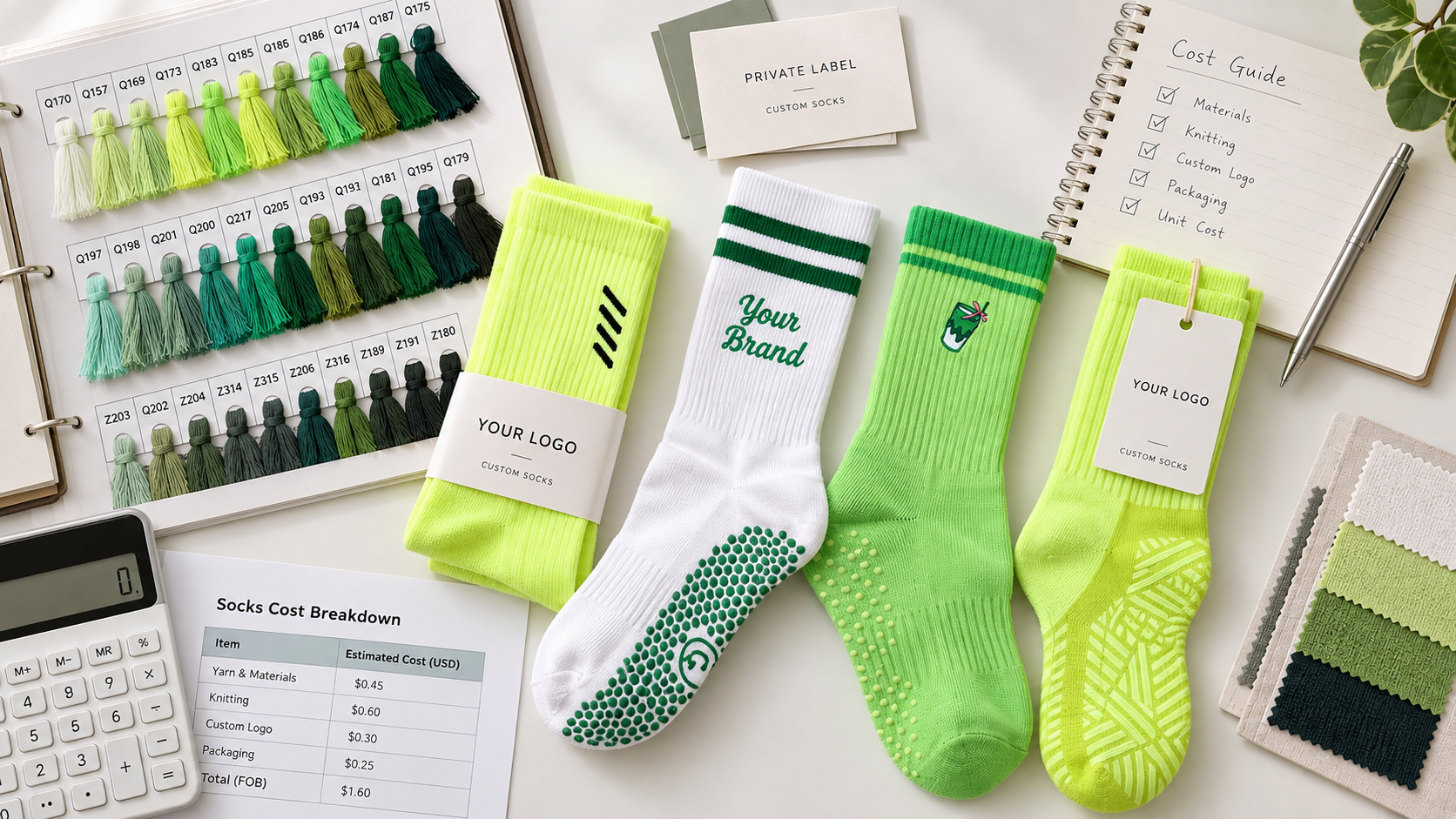
Quick Answer: What Makes Up the Cost of Private Label Socks?
A private label sock project usually includes several cost layers:
Sock production cost + Branding and customization + Sampling or setup cost + Packaging + Shipping and import costs = Estimated landed product cost
This means the factory unit price is only one part of the total budget.
For example, two brands may both order 200 pairs of socks, but one may choose a standard crew construction, two colors, a simple knitted logo and a paper band, while the other chooses a performance construction, cushioning, custom yarn colors, silicone grip and a retail box. The quantities are identical. The project costs are not.
1. Sock Style Is the Starting Point
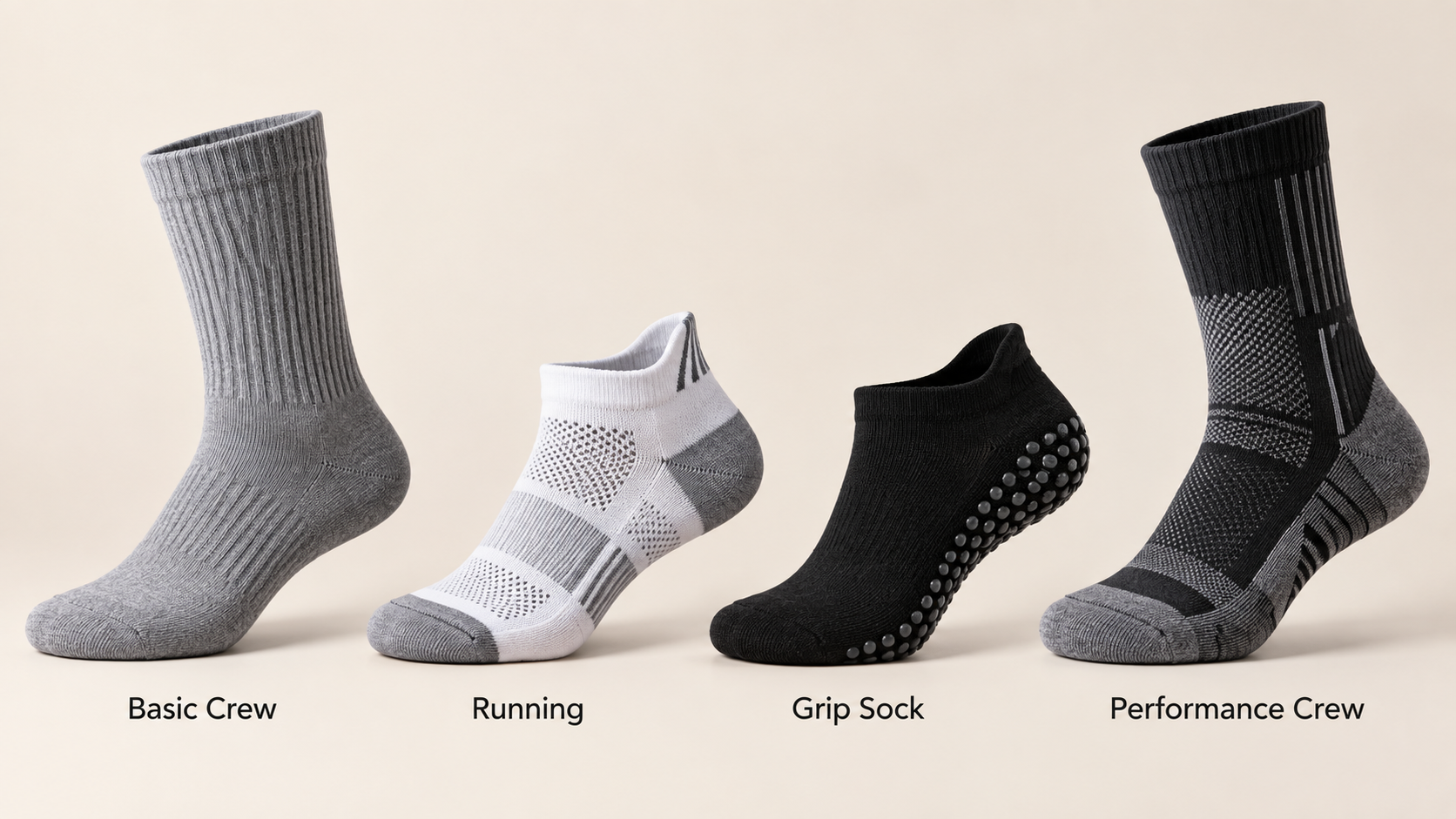
Different styles require different yarn consumption, knitting time, machine settings, finishing and technical construction.
A standard crew sock is usually simpler than a technical running or grip sock.
| Sock Type | Relative Complexity | Typical Cost Drivers |
|---|---|---|
| Basic Crew Sock | Lower | Yarn, logo, colors |
| Lifestyle / Retro Sock | Low–Medium | Color changes, stripes, jacquard |
| Running Sock | Medium | Mesh, arch support, cushioning |
| Grip Sock | Medium–High | Silicone grip, application process |
| Technical Performance Sock | High | Multiple structures, reinforcement, specialty yarn |
For a new brand, starting with a proven base style can help keep development more controlled. Instead of developing every part of the sock from zero, you customize the elements customers actually see: branding, colors, graphics and packaging.
This is one reason private label can be more practical for an initial launch than full OEM product development.
2. Order Quantity Has a Major Impact on Price Per Pair
Quantity is one of the biggest pricing variables. Small production runs still require many of the same setup steps as larger orders.
- yarn preparation
- machine programming
- logo setup
- knitting setup
- finishing
- inspection
- packing
The private label sock manufacturing process shows how sampling, knitting, inspection and packing fit together before bulk approval. When these costs are spread across only a small number of pairs, the cost per pair tends to be higher. As volume increases, production cost can usually be distributed across more units.
| Order Size | Typical Buyer Goal | Pricing Situation |
|---|---|---|
| Around 50 pairs | Product test | Higher cost per pair |
| 100–200 pairs | Small launch | Better balance of risk and cost |
| 300–500 pairs | Established first collection | Improved production efficiency |
| 500+ pairs | Proven product / reorder | Greater opportunity to optimize unit cost |
This does not mean new brands should automatically order more. A lower unit price is only useful if you can sell the inventory. For an early-stage brand, avoiding unsold stock may be more valuable than saving a small amount on each pair.
3. Material Choice Changes the Cost
Yarn composition affects both product performance and manufacturing cost. Common sock materials may include:
- cotton
- combed cotton
- polyester
- nylon
- polyamide
- elastane
- performance yarn blends
The right material depends on how the sock will be used. An everyday lifestyle sock may prioritize softness, comfort and appearance, while a running sock may prioritize moisture management, stretch, breathability and durability.
The cheapest yarn is not automatically the best commercial choice. If the product feels wrong for the intended customer, saving on material can reduce repeat purchases. The material specification should therefore match the price position of your brand.
4. Construction Can Matter More Than Material
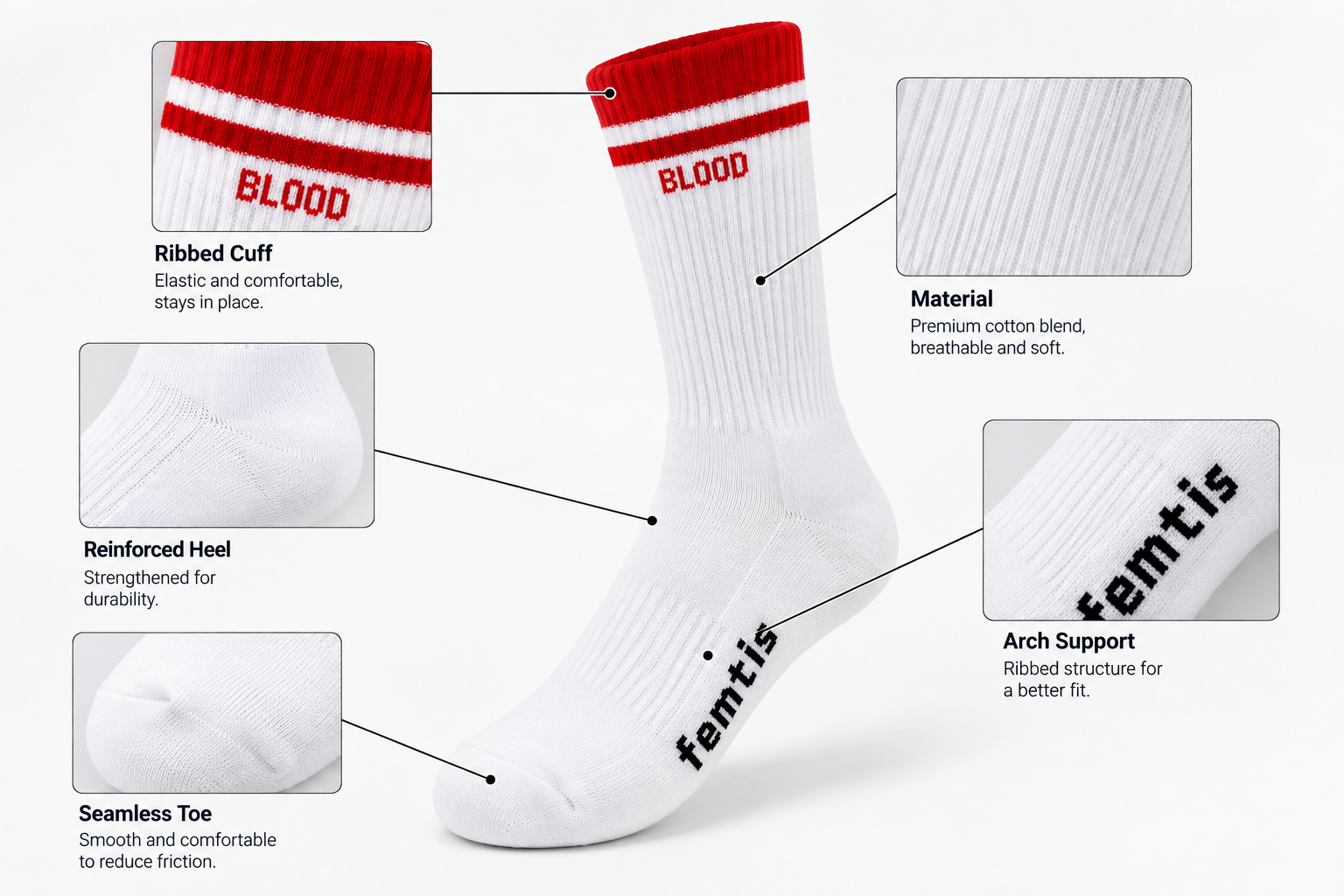
Two socks can use similar yarns but have very different production costs because construction matters.
- rib structures
- mesh zones
- arch compression
- terry cushioning
- reinforced heel
- reinforced toe
- special cuffs
- anatomical knitting
A basic crew sock might use a relatively simple structure. A performance sock may combine several knitting zones in one product. This requires more production planning and machine time.
For buyers, this means you should not compare quotes only by fiber composition. Ask what construction is actually included.
5. How Much Does a Custom Logo Add?
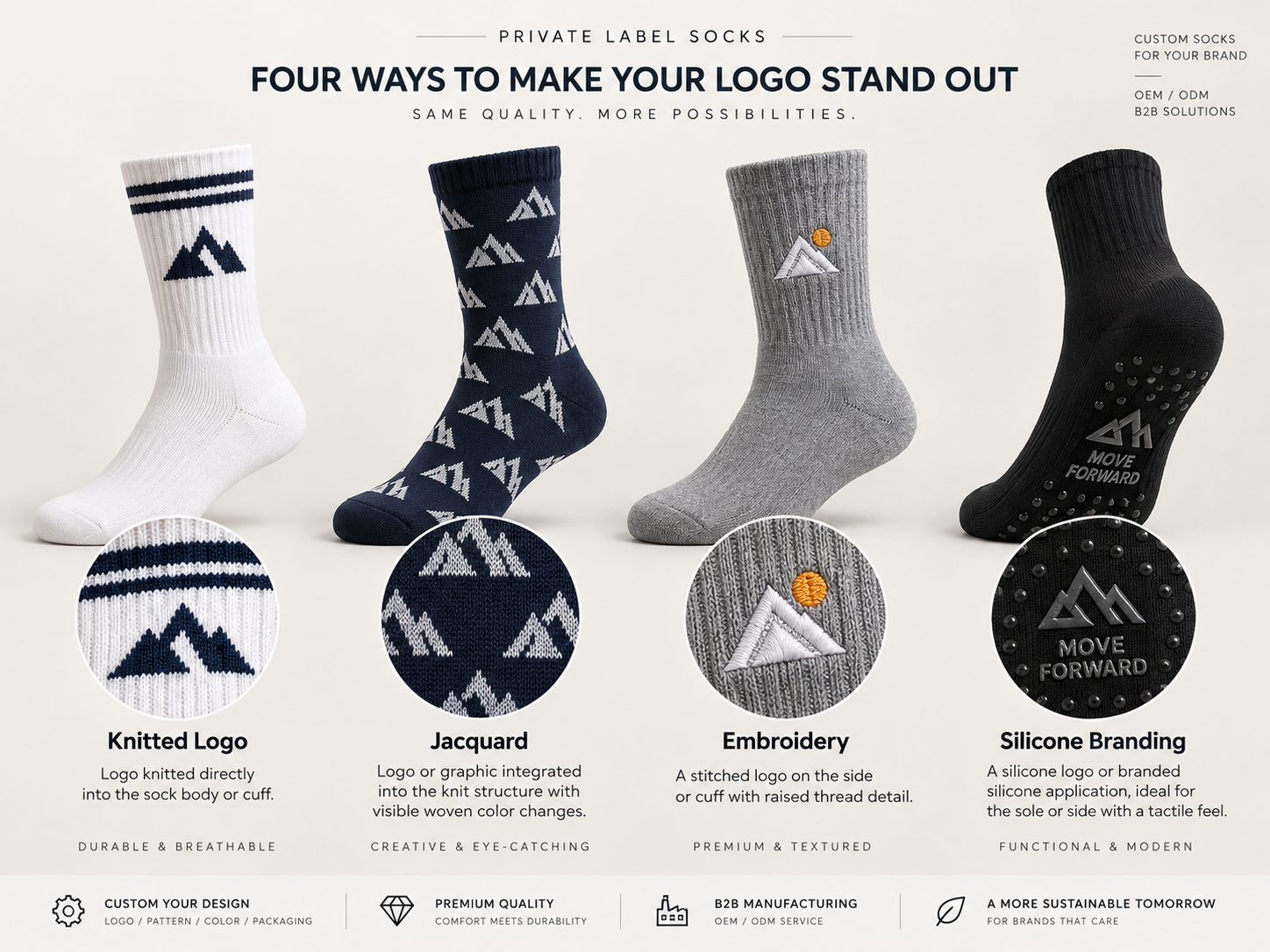
Logo cost depends on how the branding is produced. Common methods include:
Knitted-In Logo
The logo becomes part of the knitted sock structure. This is commonly used for private label socks because it creates a durable and integrated appearance.
Best for:
- brand names
- simple icons
- initials
- side logos
Complex artwork may need to be simplified to knit cleanly.
Jacquard Graphics
Jacquard allows larger knitted patterns, graphics or repeated branding. It can create a stronger visual identity, but complicated multi-color designs may require additional development.
Embroidery
Embroidery can work for certain products and logo positions. However, it adds an additional process after knitting and may not suit every sock construction.
Silicone Branding
Grip socks may use silicone not only for function but also for branding, such as initials, logo symbols or repeating patterns.
A custom grip design may require separate setup or tooling. Buyers should distinguish between an existing grip pattern and a fully custom grip pattern.
6. Colors Affect Both Cost and MOQ
A common mistake is assuming that adding several colors has almost no effect on the project. In reality, every additional color may affect yarn preparation, minimum quantity, production scheduling, SKU count, packaging and inventory.
For example:
2 styles × 4 colors × 2 sizes = 16 product combinations
2 styles × 2 colors × 2 sizes = 8 product combinations
This is one of the easiest ways to control the first-order budget without reducing product quality. Instead of making the sock cheaper, you make the collection more focused.
7. Size Range Changes the Total Order Value
Sizes may also have their own production minimums. For example, a project could include:
| Style | Color | Size |
|---|---|---|
| Crew Sock | Black | S/M |
| Crew Sock | Black | L/XL |
| Crew Sock | Cream | S/M |
| Crew Sock | Cream | L/XL |
This is already four SKUs. Therefore, when comparing supplier quotations, do not only ask: “What is the cost for 100 pairs?” Ask: “Can the 100 pairs be divided between colors and sizes, or does each configuration have its own MOQ?”
That question can have a much larger impact on your total investment.
Not sure how minimum quantities are calculated? Read our private label socks MOQ guide.
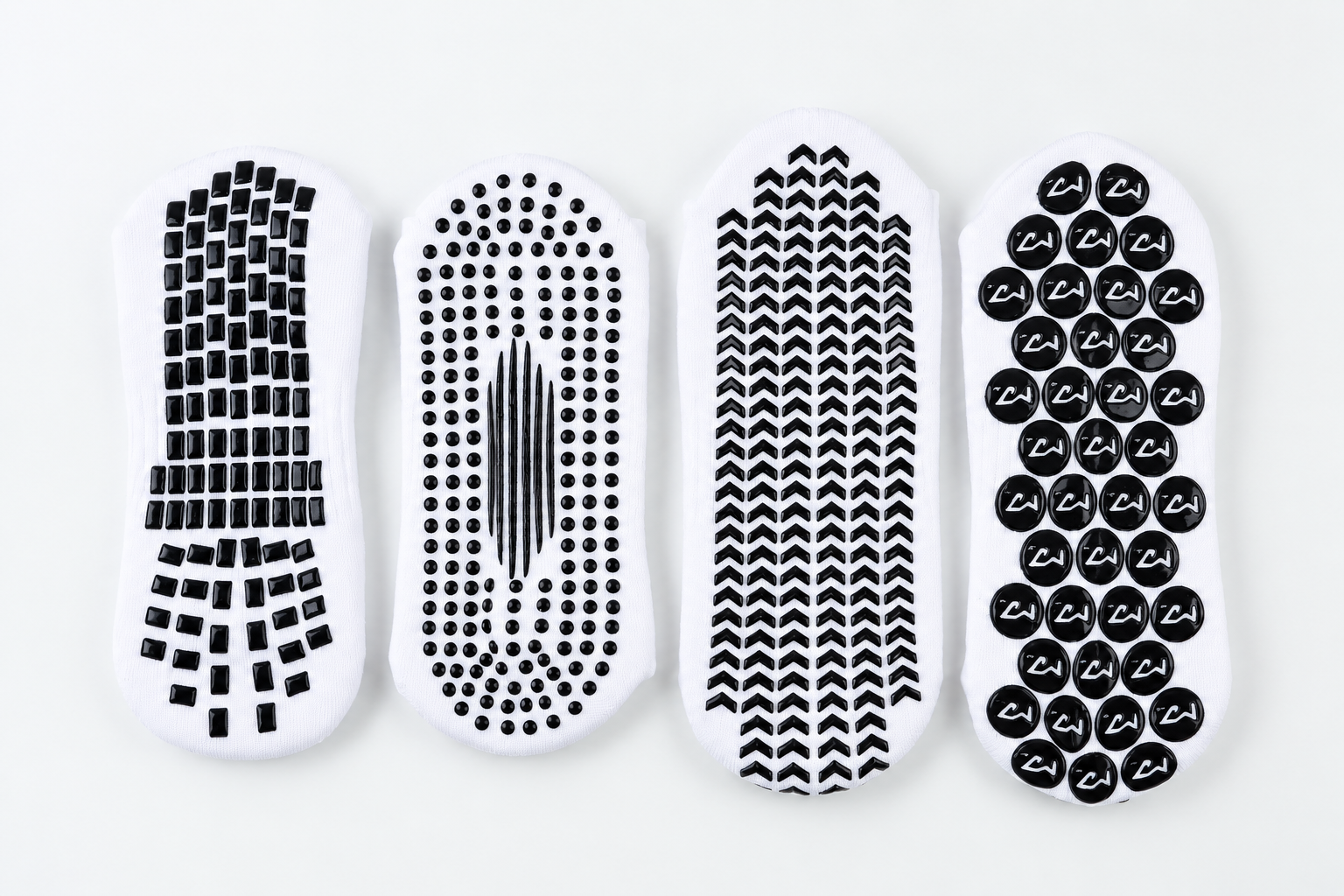
8. Grip Socks Have Additional Cost Factors
Grip socks have several cost components that standard socks do not. These may include:
- grip material
- grip coverage
- grip pattern
- silicone application
- mold or plate preparation
- additional production steps
Option A — Existing Grip Pattern
Use a proven grip layout while customizing sock color, upper logo and packaging. This is usually the simpler route for an initial product test.
Option B — Custom Grip Pattern
Create a proprietary outsole using brand initials, logos, custom icons or a repeating pattern. This provides stronger branding but may require additional development and setup.
For new brands, it can make sense to validate the product first and increase customization as the order volume grows.
9. Packaging Can Change the Product Cost Significantly
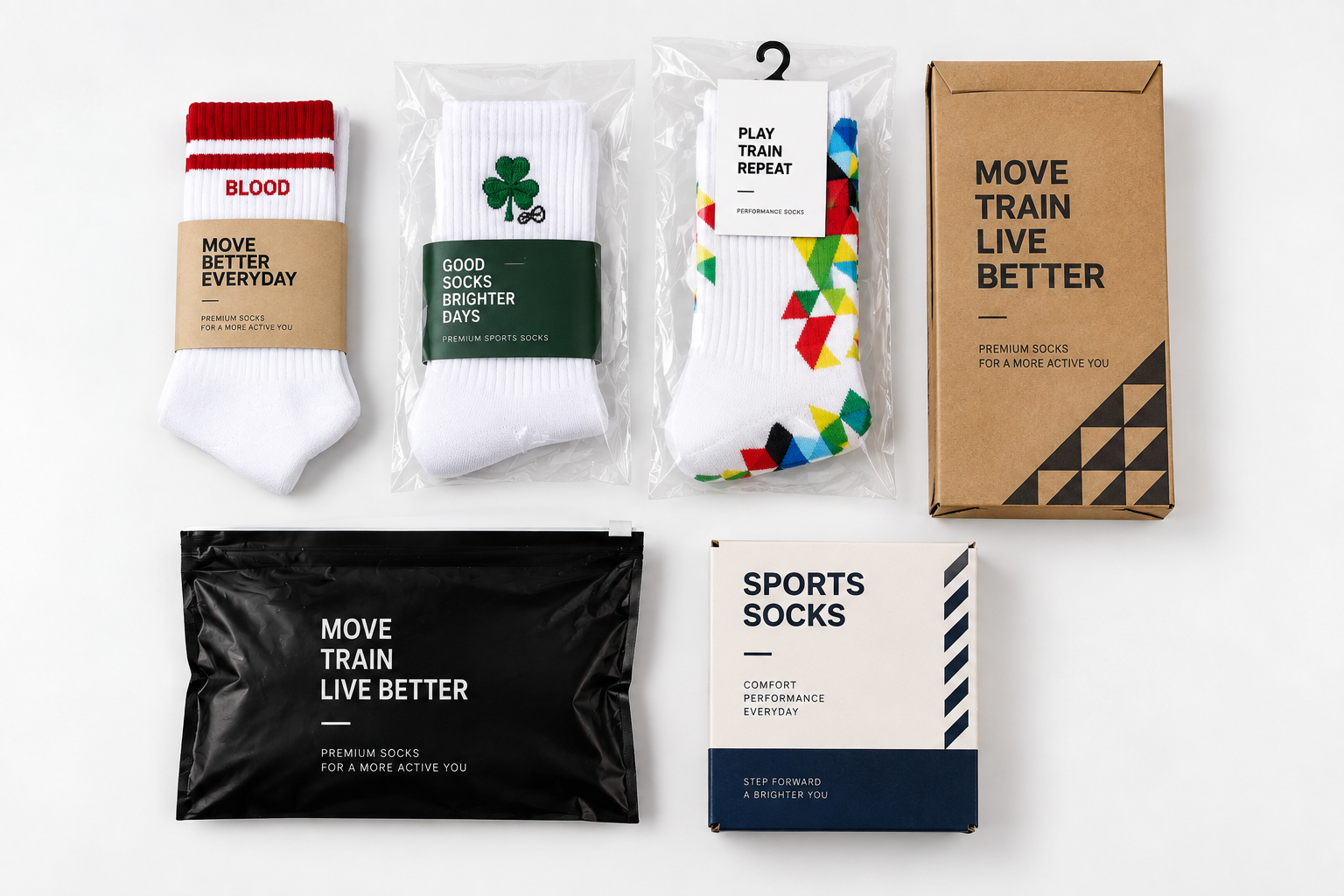
Private label packaging is another important part of the budget. Common choices include:
- paper band
- hangtag
- barcode sticker
- poly bag
- retail box
- custom insert
- shipping carton
The simplest option may be Sock + branded paper band, while a more developed retail package might include Sock + hangtag + barcode + custom box + insert.
The correct packaging depends on where the product will be sold.
Ecommerce Brand
- compact packaging
- shipping efficiency
- branding
Boutique Retail
- hangability
- barcode
- size visibility
- retail-ready presentation
Premium Gift Product
- custom box
- insert
- premium finishing
Packaging should support the sales channel. It should not be added simply because it looks more expensive.
10. Sampling Is Part of the Product Development Budget
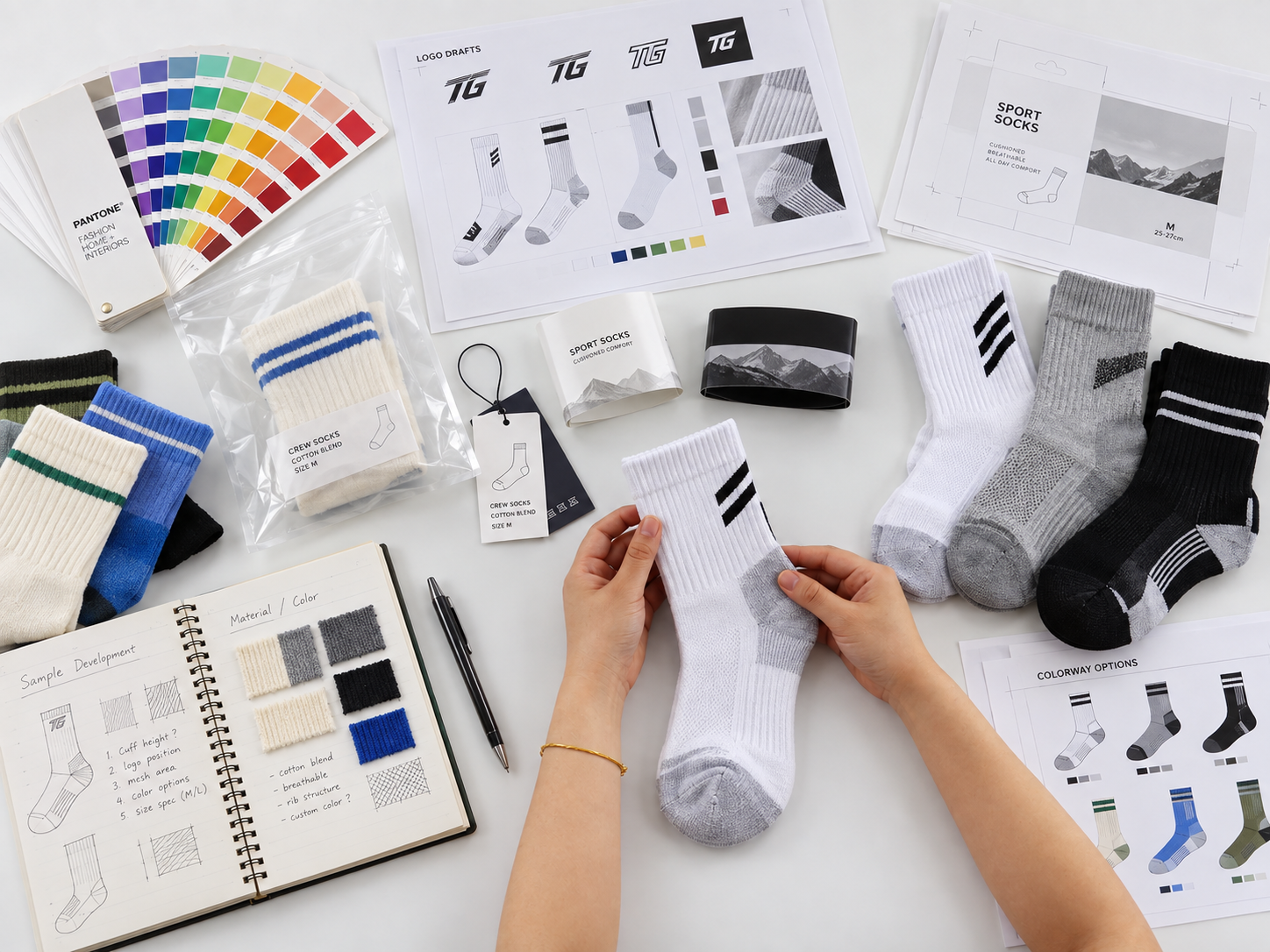
New brands sometimes focus only on bulk pricing and forget about sample development. A sample allows you to evaluate:
- fit
- size
- yarn feel
- thickness
- elasticity
- logo position
- colors
- grip
- packaging
Sample development may involve a sample fee, artwork setup, a custom mold or plate and shipping.
This should be treated as a product-development cost, not wasted expense. Finding a problem during sampling is much cheaper than discovering it after several hundred pairs have already been produced.
11. Custom Packaging May Have Its Own Setup Cost
Packaging often comes from a different production process than the socks themselves. Paper bands need printing, hangtags need cutting and printing, boxes require material, printing and assembly, and barcodes require SKU information.
This means the packaging supplier may have a different MOQ from the sock factory.
Before approving packaging, ask:
- What is the packaging MOQ?
- Is there a printing setup fee?
- Can leftover packaging be stored for reorders?
- Can the same packaging work across multiple colors?
- Does every size need different packaging?
A universal packaging design can help new brands reduce complexity.
12. Shipping Is Part of the Real Cost
The factory unit price is not the final amount a brand spends. You may also need to consider:
- international freight
- customs clearance
- duties
- local taxes
- destination delivery
Shipping cost depends on destination, total weight, carton dimensions, shipping method and delivery terms.
For accurate shipping estimates, suppliers will normally need at least:
- destination country
- postal code
- quantity
- packaging configuration
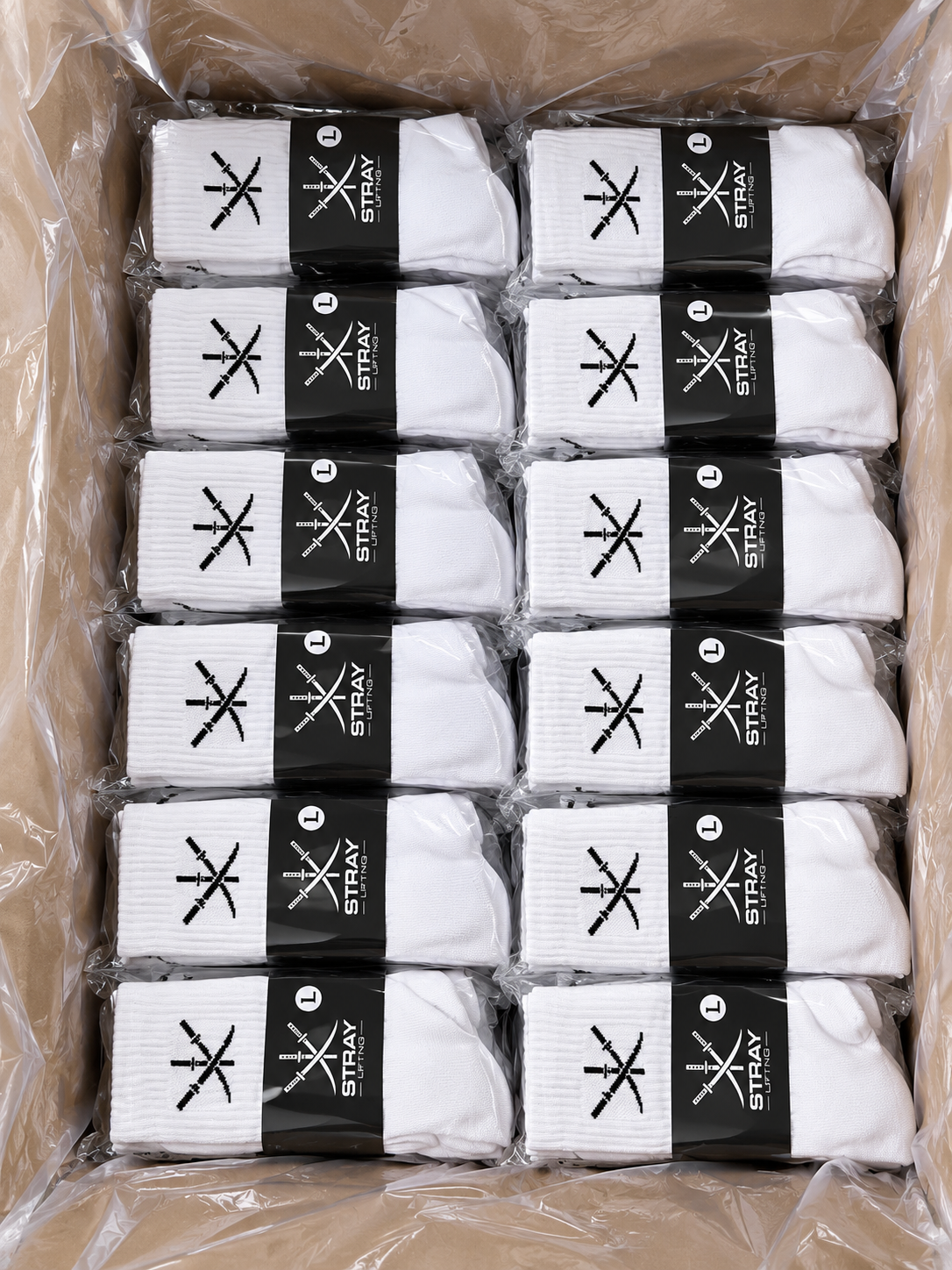
Factory Price vs Landed Cost
This distinction is very important. Suppose a supplier gives you a price of $X per pair. That may only represent the product itself.
Sock production + Packaging + Sampling/setup allocation + Freight + Import cost = Landed Cost
Landed cost is the number you should use when calculating your retail margin.
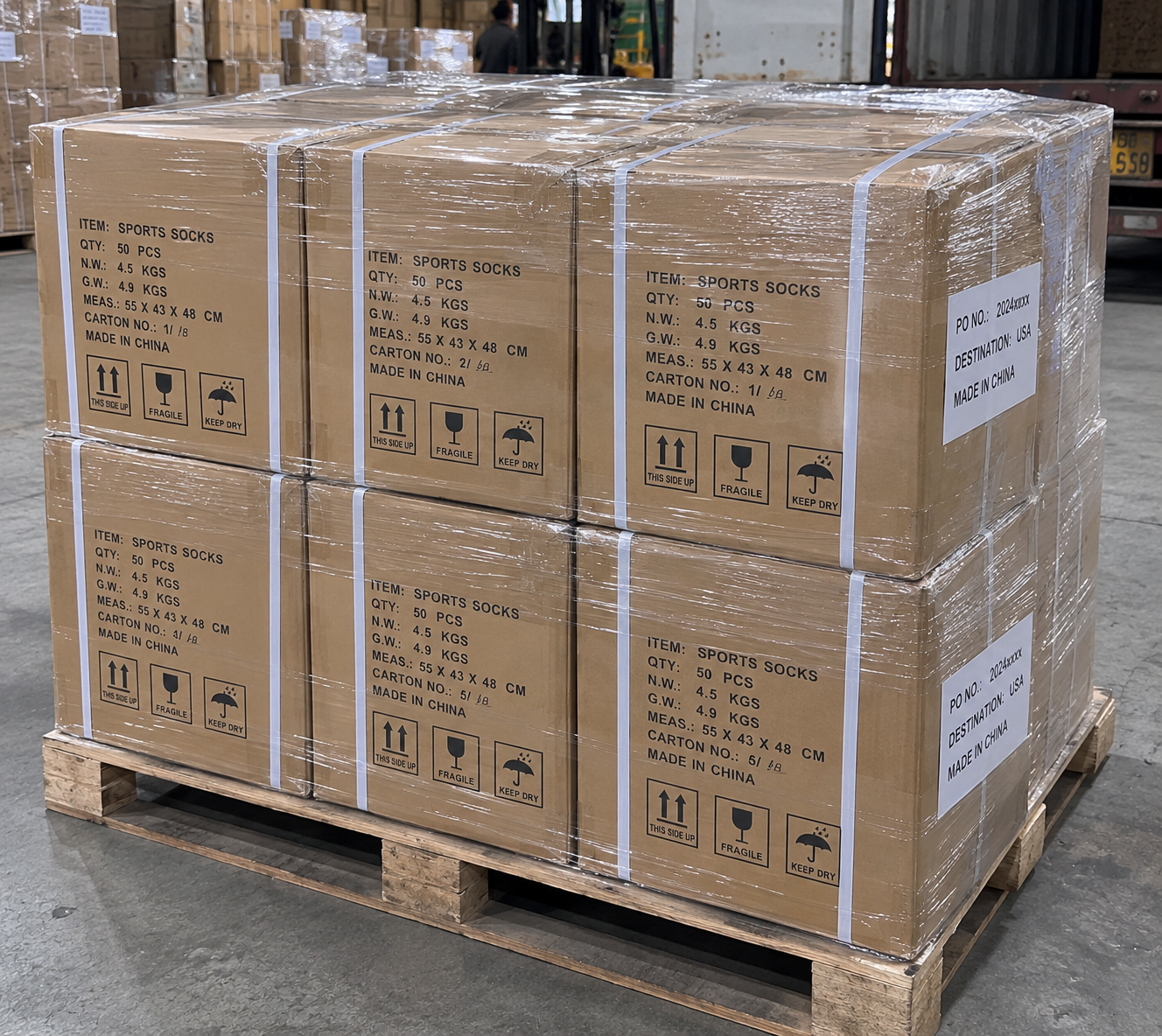
How Should a New Brand Calculate Its Real Sock Cost?
Step 1 — Calculate Product Cost
Unit price × number of pairs
Step 2 — Add One-Time Development Costs
Examples include samples, mold and artwork setup.
Step 3 — Add Packaging
Calculate packaging per unit.
Step 4 — Add Freight
Divide shipping cost across the total number of units.
Step 5 — Add Applicable Import Costs
Depending on your destination and import terms.
Total landed cost ÷ number of sellable pairs = landed cost per pair
That figure gives you a much better basis for setting your retail price.
Example: Comparing Two First-Order Strategies
Brand A
- 4 sock styles
- 4 colors each
- multiple sizes
- premium boxes
The money is spread across many SKUs. Each SKU has limited stock.
Brand B
- 2 proven styles
- 2 colors each
- focused size range
- simple branded paper bands
Brand B can put more inventory behind fewer products. This makes it easier to learn which style sells, which color performs and which size needs restocking.
A better first order is not always the cheapest order. It is the order that gives you the most useful market information for the money invested.
Should You Choose the Cheapest Sock Manufacturer?
Comparing quotations purely by unit price is risky because two quotations may not include the same specification.
| Item | Supplier A | Supplier B |
|---|---|---|
| Yarn composition | ? | ? |
| Sock construction | ? | ? |
| Logo method | ? | ? |
| MOQ | ? | ? |
| Packaging | ? | ? |
| Sample | ? | ? |
| QC | ? | ? |
| Lead time / shipping term | ? | ? |
The goal is to compare like with like.
Private Label vs Fully Custom: Which Costs More?
For many new brands, private label is the lower-complexity route. Private label normally begins with an existing or proven sock construction. You then customize areas such as colors, branding, graphics and packaging.
Fully custom development may require changes to construction, fit, yarn, cushioning, compression, grip and dimensions. Because more development work is involved, fully custom projects may require higher development costs or production quantities.
Do I actually need a new sock construction, or do I need an existing good sock customized for my brand?
Those are two very different projects.
How to Reduce Your First Private Label Sock Order Cost
Start With Fewer Styles
Launch 1–3 strong styles instead of a large collection.
Use Fewer Colors
Start with commercially useful core colors.
Use Proven Constructions
Avoid unnecessary product development when an existing base already meets the requirement.
Keep Packaging Simple
A good paper band or hangtag may be enough for the first launch.
Use Existing Grip Patterns
If proprietary grip is not essential at launch, begin with an existing production pattern.
Test Before Scaling
Samples and smaller production runs can reduce the risk of investing heavily in the wrong product.
The goal should be: reduce complexity, not reduce product quality.
What Information Does a Supplier Need Before Quoting?
If you want an accurate private label sock quotation, prepare the following information:
- sock style
- reference image
- approximate quantity
- colors
- sizes
- logo artwork
- logo position
- target material
- packaging requirement
- target market
- shipping destination
For grip or technical socks, also specify:
- grip type
- grip coverage
- cushioning
- compression
- performance requirements
The more complete your product brief is, the more meaningful the quotation will be.
FAQ: Private Label Socks Cost
How much does it cost to manufacture private label socks?
There is no universal price per pair. Cost depends on style, material, construction, quantity, branding, packaging and shipping. The most accurate quotation requires a defined product specification.
Are private label socks cheaper than fully custom socks?
They can be easier and more economical to develop because the brand starts with a proven base construction instead of creating the entire sock from zero. However, the actual price still depends on the selected specification.
Does a larger order reduce the price per pair?
Often, larger quantities improve production efficiency and may reduce unit cost. However, brands should balance these savings against inventory risk.
Do different colors cost more?
Additional colors may increase production complexity and can create separate MOQ requirements. The biggest impact may be the increase in total inventory rather than simply the unit price.
Does custom packaging increase the price?
Yes. Paper bands, hangtags, boxes, barcode labels and other packaging components all contribute to the finished product cost. Packaging may also have its own MOQ.
How much does sampling cost?
Sampling costs depend on the product and the amount of development required. A new logo, special construction, custom grip or unique packaging can introduce additional setup costs. Always confirm what the sample charge includes before proceeding.
Are shipping costs included in the sock price?
Not always. Product pricing and freight may be quoted separately. Always confirm the shipping term and destination before calculating your final landed cost.
What is the best order quantity for a new sock brand?
There is no single ideal quantity. A new brand should usually focus on enough inventory to test real demand while keeping the number of styles, colors and sizes manageable.
Don't Optimize Only for the Lowest Price
When launching a private label sock collection, cost matters. But the cheapest possible sock is rarely the best business objective.
A stronger first order considers:
- Product quality
- MOQ
- SKU count
- Packaging
- Landed cost
- Reorder potential
For a new brand, the first production run should help answer one important question:
Which products deserve more investment?
Start with a focused range. Evaluate physical samples. Understand the complete cost. Then scale the styles that prove demand.
Ready to Price Your Private Label Sock Project?
To prepare a useful quotation, send us:
- Sock style
- Quantity
- Colors and sizes
- Logo artwork
- Packaging requirement
- Destination country / postal code
We can then review the project and recommend the most practical private label route.
Compare the starting quantity with the full cost: review our low MOQ private label socks route before finalizing the SKU and packaging plan.
← Back to Blog