 STRIVESOCK
When developing private label socks, most brands spend a lot of time thinking about yarn, colors, logo, fit, sizing and sock construction. Then packaging becomes a last-minute decision.
But packaging affects much more than appearance. The format you choose can influence:
- packaging cost
- minimum order quantity
- shipping volume
- retail display
- barcode placement
- product protection
- ecommerce fulfillment
- customer experience
- reorder complexity
For most private label sock projects, three common packaging options are:
Paper Band
Hangtag
Retail Box
None is automatically better than the others. The right choice depends on where the sock will be sold, how premium the product needs to feel, and how much packaging complexity the brand actually needs.
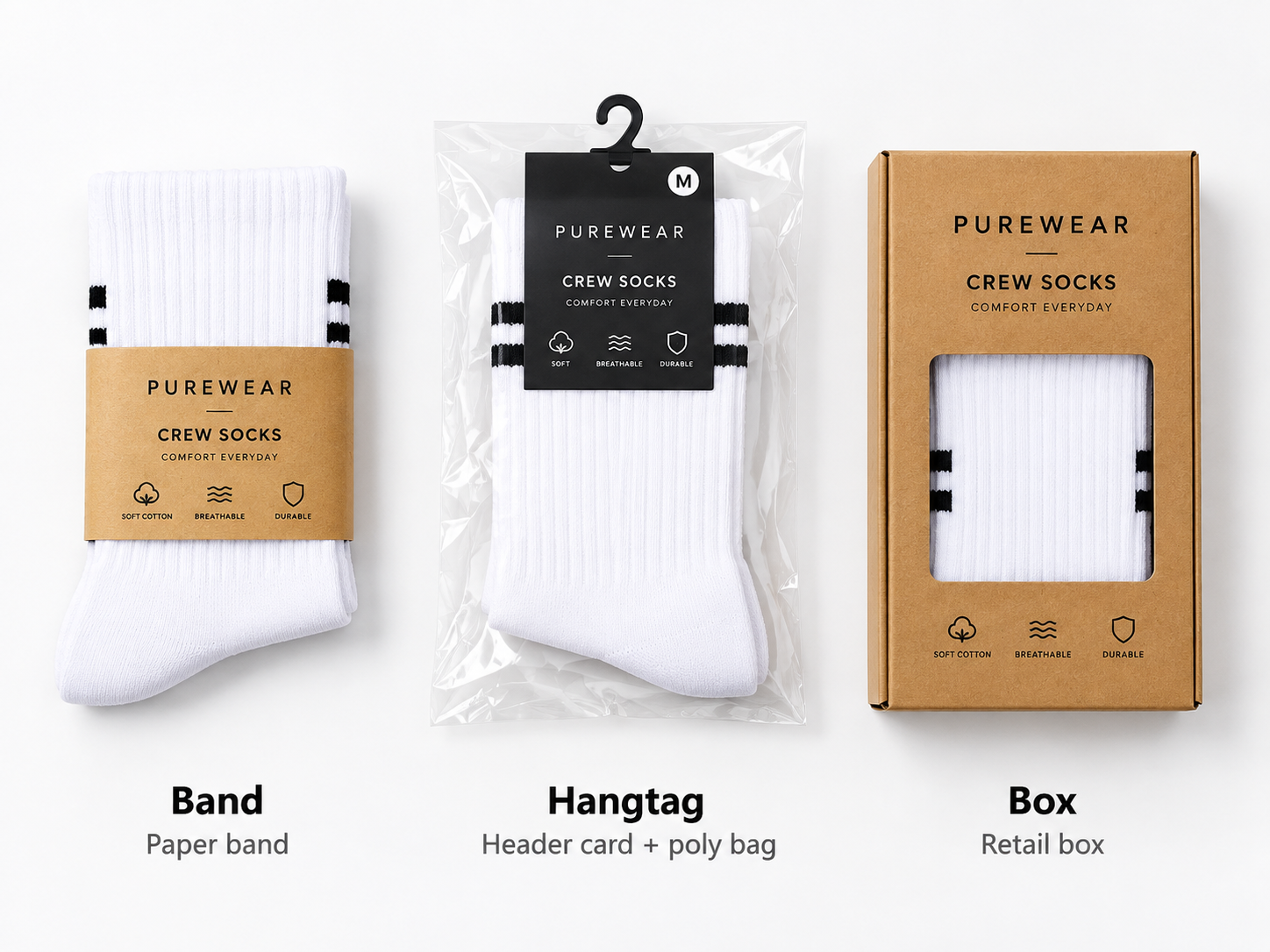
Quick Answer: Band vs Hangtag vs Box
| Packaging Type | Best For | Cost Level | Retail Display | Shipping Efficiency | Branding Space |
|---|---|---|---|---|---|
| Paper Band | Ecommerce, startups, lifestyle brands | Lower | Good | Excellent | Medium |
| Hangtag | Retail stores, sports products | Lower-Medium | Excellent | Excellent | Medium |
| Retail Box | Premium products, gifting, higher retail price | Higher | Excellent | Lower | High |
For many new private label sock brands, a paper band or hangtag is usually enough for the first launch.
A box becomes more attractive when the packaging itself contributes meaningfully to premium positioning, gifting, retail presentation, product protection or customer experience.
The best packaging is not the most expensive packaging. It is the packaging that supports the way the product will actually be sold.
Why Sock Packaging Matters
A sock may be technically excellent, but before the customer touches it, packaging often communicates brand identity, price position, size, product type, material information, use case and care information.
For retailers, packaging also has operational functions. They may need:
- barcode
- SKU
- size
- color name
- product name
- hang hole
- country-of-origin information
- labeling information
Packaging therefore has two jobs:
Brand Job
Make the product feel consistent with the brand.
Commercial Job
Make the product easy to identify, stock, sell and reorder.
Good packaging needs to do both.
Option 1: Paper Band Packaging
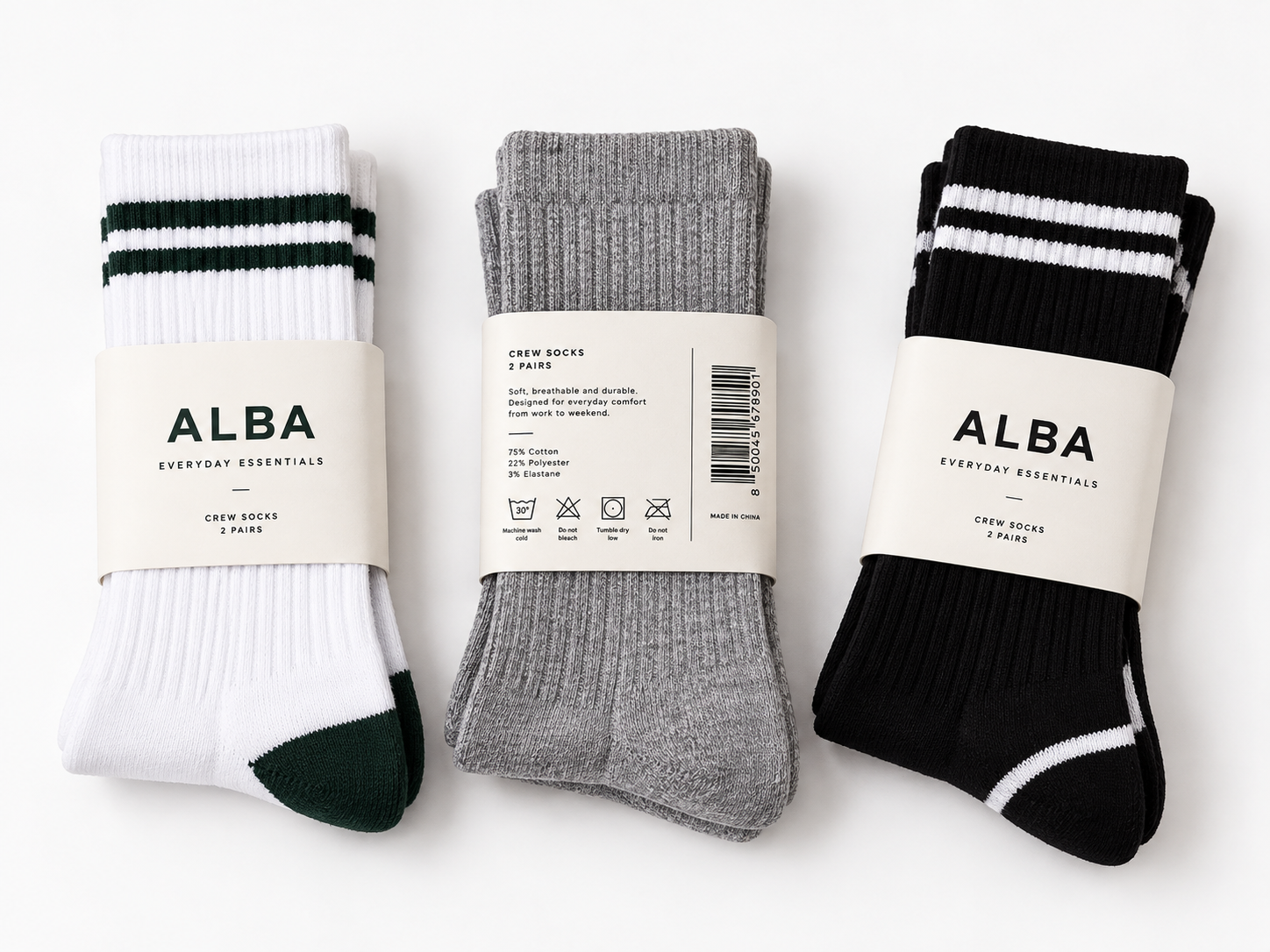
A paper band is one of the most common packaging formats for private label socks. The printed card wraps around part of the folded sock.
It can carry information such as:
- logo
- product name
- size
- color
- barcode
- website
- material
- care information
while still allowing much of the actual sock to remain visible.
Why Paper Bands Work Well for New Brands
Paper bands offer a useful balance between branding, simplicity and cost control. They can make a standard sock look retail-ready without requiring a large or complicated package.
This is especially useful for brands that want the sock itself to remain the main visual focus. A customer can still see color, knit texture, cuff, pattern and logo before opening the product.
Best Uses for Sock Paper Bands
- lifestyle socks
- everyday crew socks
- ecommerce brands
- apparel brands
- small first collections
- boutique retail
- private label test orders
They also work well when several styles share the same overall brand identity.
Advantages of Paper Bands
Lower Packaging Complexity
Compared with a box, a band normally uses less material and has a simpler structure. That can help keep a first private label program manageable.
Efficient Shipping
A paper band adds very little volume. This matters because freight cost is affected not only by weight but also by carton size. A compact packaged sock allows more units to fit into export cartons, ecommerce storage and fulfillment bins.
Product Remains Visible
This is particularly useful for products where color, knit pattern, texture or grip design matters. Customers can evaluate more of the actual product.
Easy to Build a Consistent Packaging System
One band design may be adaptable across several styles. For example, the same base design could be used with variable information for Essential Crew 01, Performance Crew 01 and Retro Sport 01.
Limitations of Paper Bands
Paper bands offer less protection than a box and may not create the same premium unboxing experience. Depending on the fold, some product information space can also be limited.
For very technical products, brands can use a QR code, secondary label, insert or website product page rather than making the band excessively large.
Option 2: Hangtag Packaging
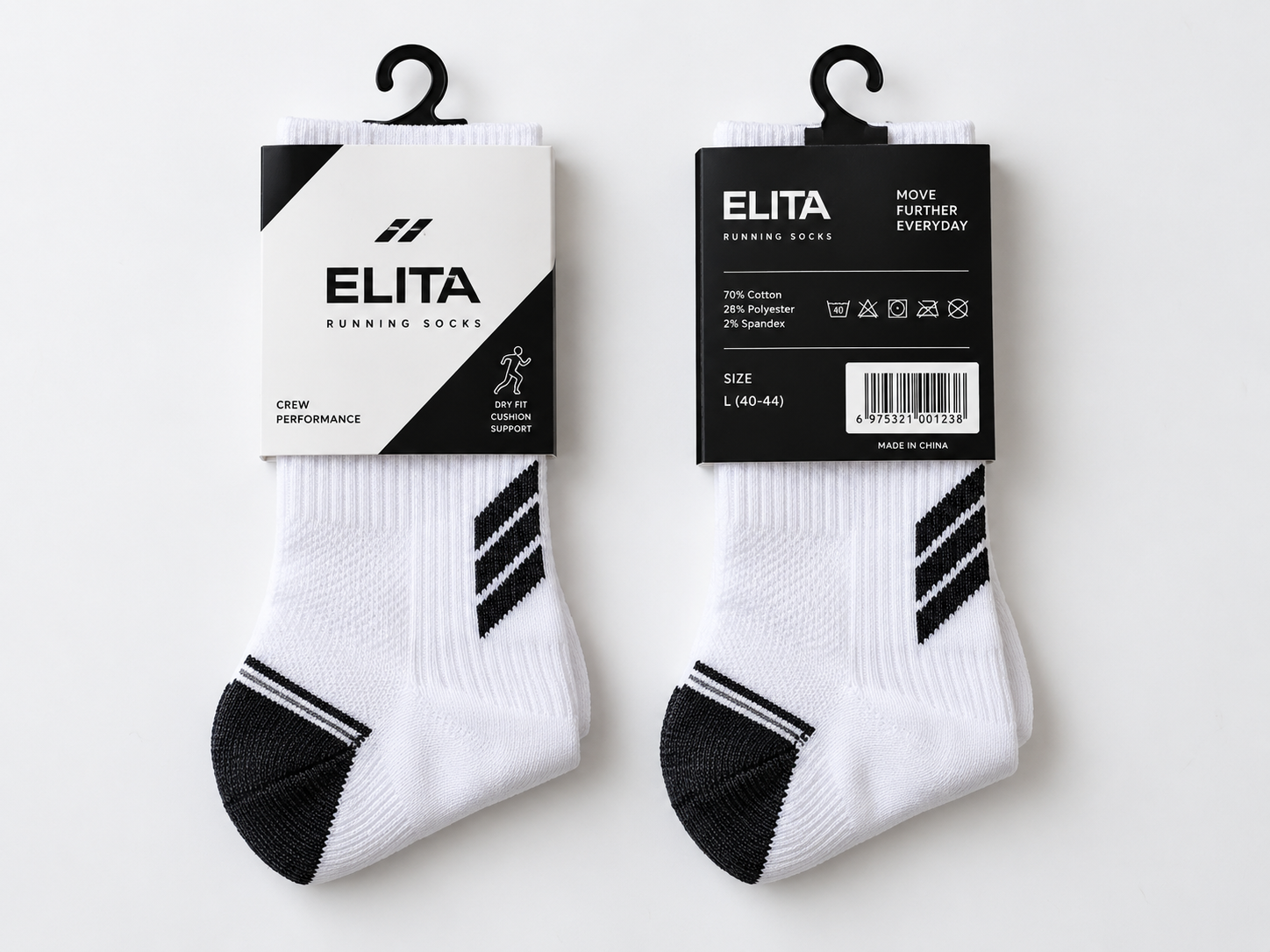
A hangtag is attached directly to the sock, often with a plastic fastener, string, clip or other attachment method. It can sit at the cuff or another suitable location.
A hangtag allows the sock itself to remain almost completely visible.
Why Hangtags Work Well for Retail
Hangtags are especially useful when the product needs to be displayed on hooks, racks, retail walls or store fixtures. Depending on the construction, a hangtag can include a hang hole or support other merchandising systems.
Best Uses for Sock Hangtags
- running socks
- football socks
- gym socks
- performance socks
- outdoor socks
- boutique retail
- sporting goods stores
They work particularly well when the technical product itself should remain visible.
Advantages of Hangtags
Maximum Product Visibility
Unlike a wide paper band, the tag covers only a small part of the product. Customers can inspect knit zones, logo, reinforcement, mesh, grip and pattern more easily.
Good for Technical Information
A larger folded hangtag can provide space for feature icons, sizing, materials, care instructions, technical claims, QR code and brand story without covering the entire product.
Good Retail Merchandising
Hangtags can be designed specifically for store display. This can make products easier for retailers to organize, hang, scan and identify.
Low Shipping Volume
Like a band, a hangtag adds very little packaging volume. This can make it practical for international wholesale supply.
Limitations of Hangtags
Hangtags provide limited physical product protection. The sock remains exposed. The attachment point must also be considered carefully because poor attachment can damage yarn, distort the cuff, look untidy or interfere with presentation.
Paper Band vs Hangtag
These two formats are often the closest alternatives.
Choose a Paper Band When:
- you want stronger front-facing branding
- you want a clean folded presentation
- you want simple ecommerce photography
- you want consistent packaging across a collection
Choose a Hangtag When:
- you want more of the sock visible
- you need retail hanging
- you need technical product communication
- you want a sports-oriented presentation
Neither format requires the product to feel cheap. A well-designed paper band or hangtag can support a premium brand if typography, paper, printing, layout, product photography and sock quality are consistent.
Option 3: Retail Box Packaging
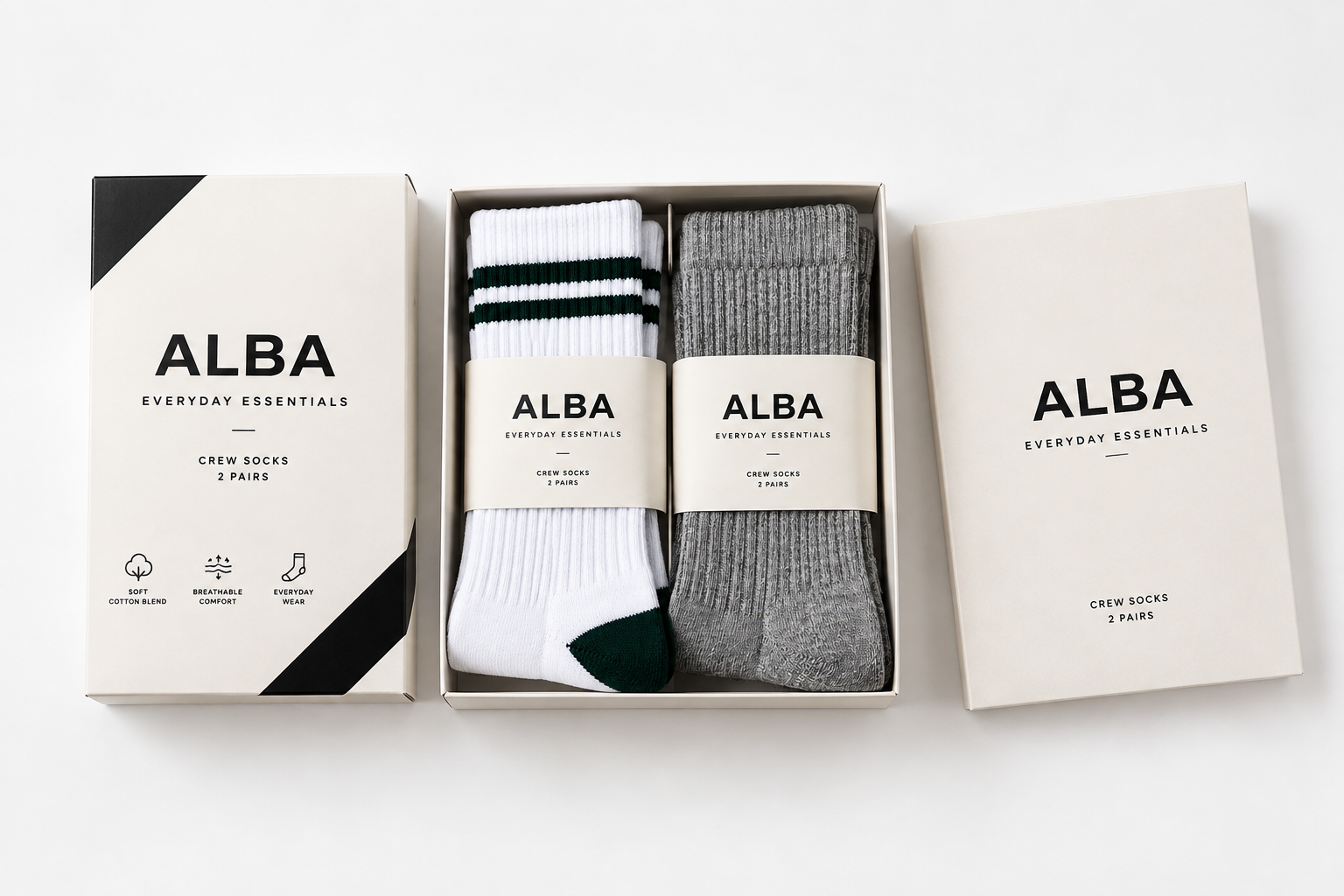
A retail box creates a more enclosed product presentation. Boxes can vary from simple folding cartons to more complex premium structures.
A box may include brand logo, window, product information, insert, barcode, size label, QR code and internal card. This creates substantially more packaging surface than a band or hangtag.
When Does a Sock Box Make Sense?
Premium Sock Brand
The packaging helps justify a higher retail position.
Gift Product
The buyer is purchasing the sock as a present.
Multi-Pair Set
The box keeps two or more pairs together.
Subscription Product
The unboxing experience matters.
Premium Performance Product
Technical storytelling requires more space.
Retail Program
A box fits the retailer's shelf or display format.
In these situations, packaging contributes real commercial value.
Advantages of Retail Boxes
Stronger Brand Presence
A box creates significantly more visual space. You can communicate brand story, technical features, product benefits, instructions, lifestyle photography and QR code without overcrowding the product.
More Premium Presentation
A box can increase perceived product value, particularly for gifting, premium sports products, limited editions and bundles.
Better Product Protection
The sock is more protected during storage, transport and retail handling. This may matter for products with special grip, delicate decorative features or premium finishing.
Better for Multi-Pair Products
A box can create a clear unit when selling a 2-pair pack, 3-pair pack, gift set or starter kit.
Limitations of Retail Boxes
The main disadvantage is complexity. A box can increase packaging unit cost, packaging MOQ, design work, storage space, export carton size, shipping volume and assembly time.
For a new brand, this matters. A premium box may look impressive but can consume budget that could otherwise support more inventory, better samples, photography or marketing.
Packaging Cost Is More Than the Unit Price
When comparing packaging, do not only compare how much the band costs versus the box. The real packaging cost may include:
Packaging unit cost + Printing/setup + Assembly + Labels + Storage + Additional shipping volume
This gives you a more realistic picture. A box that costs only slightly more at production may still create a larger difference once freight and storage are considered.
Packaging Can Have Its Own MOQ
This is very important for private label buyers. Your socks may have one MOQ. Your packaging may have another.
Sock MOQ: based on style, color and size.
Printed Packaging MOQ: based on the printing supplier and packaging design.
This means you could theoretically produce more packaging pieces than socks in the first order. Unused packaging may sometimes be saved for repeat orders if artwork stays the same, dimensions stay the same, the supplier can store it and labels remain current.
One Packaging Design vs Packaging for Every SKU
New brands often make packaging too complicated. Imagine you have 3 styles x 3 colors x 2 sizes = 18 SKUs. If you create a completely different printed package for every SKU, you may end up with 18 packaging variations.
A better approach may be:
Universal Brand Packaging
Use one main paper band or box design, then use variable product label, size sticker, color sticker or barcode. This can make packaging much easier to manage.
Example: Universal Paper Band System
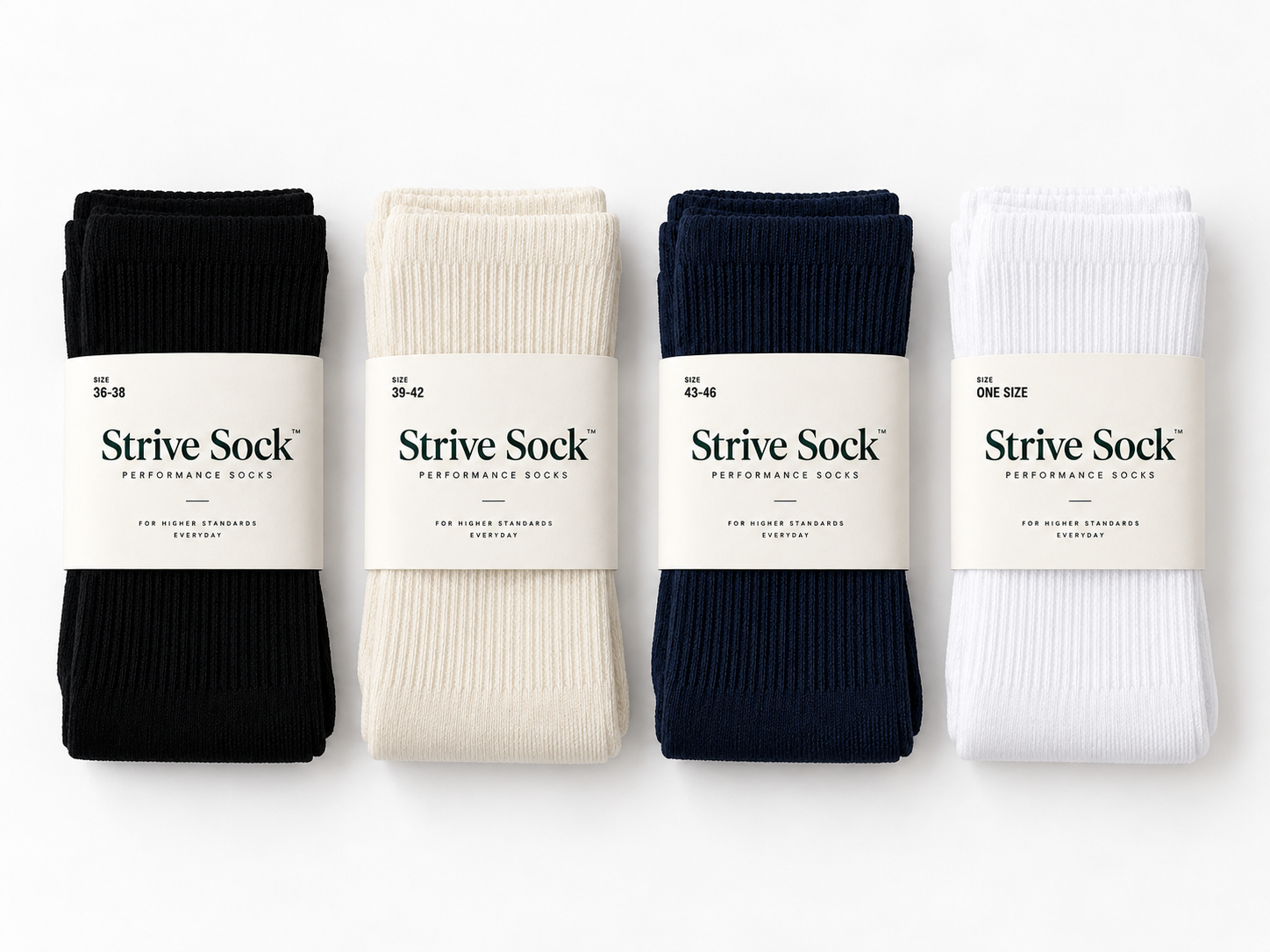
Suppose your first collection includes Essential Crew 01 in Black and Cream, with S/M and L/XL sizes.
Instead of printing four different band designs, you might use:
Main Band
Same:
- logo
- brand message
- visual identity
- website
Variable:
- SKU sticker
- size
- barcode
- color name
This creates consistency while reducing packaging variation.
Where Should the Barcode Go?
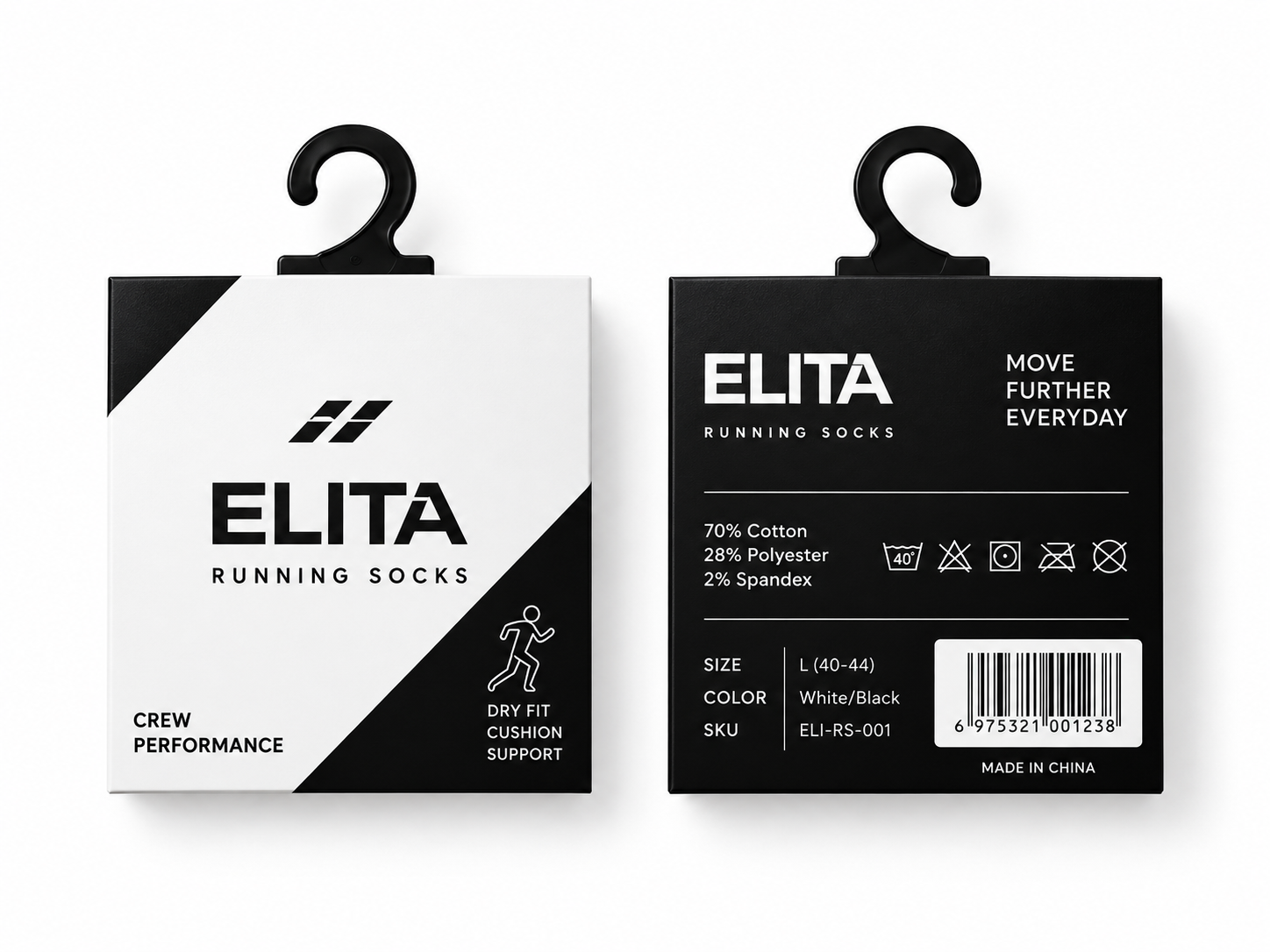
If your product will enter retail or organized ecommerce inventory, barcode planning should happen before packaging is finalized.
- back of paper band
- back of hangtag
- underside of box
- separate barcode label
The location should be easy to scan, flat, visible, away from folds and away from highly textured surfaces.
Do not place the barcode simply where there happens to be empty space. Think about how a retailer or warehouse worker will actually scan the product.
What Information Should Sock Packaging Include?
Front
- Brand logo
- Product name
- Product type
Back / Side
- Size
- Color
- Material composition
- Care information
- Barcode
- Website
- Product code / SKU
Depending on your market, additional labeling or regulatory information may also be required. That should be reviewed before final production.
Should the Material Composition Be Printed on the Packaging?
Many brands include material information either on the sock label, on packaging, or on both. From a buyer perspective, packaging is useful because customers can evaluate the product before purchase.
The stated composition should match the approved production specification. Avoid finalizing packaging too early if materials may still change during sampling.
Packaging Should Be Finalized After the Sock Sample
Do not fully produce packaging before the final sock is approved because the sample may change dimensions, folded size, material, product name, color name, grip details, logo or size structure.
A better order is:
Sock Development -> Sample Approval -> Packaging Finalization -> Bulk Production
This reduces the risk of mismatched packaging.
How the Sock Should Be Folded Matters Too
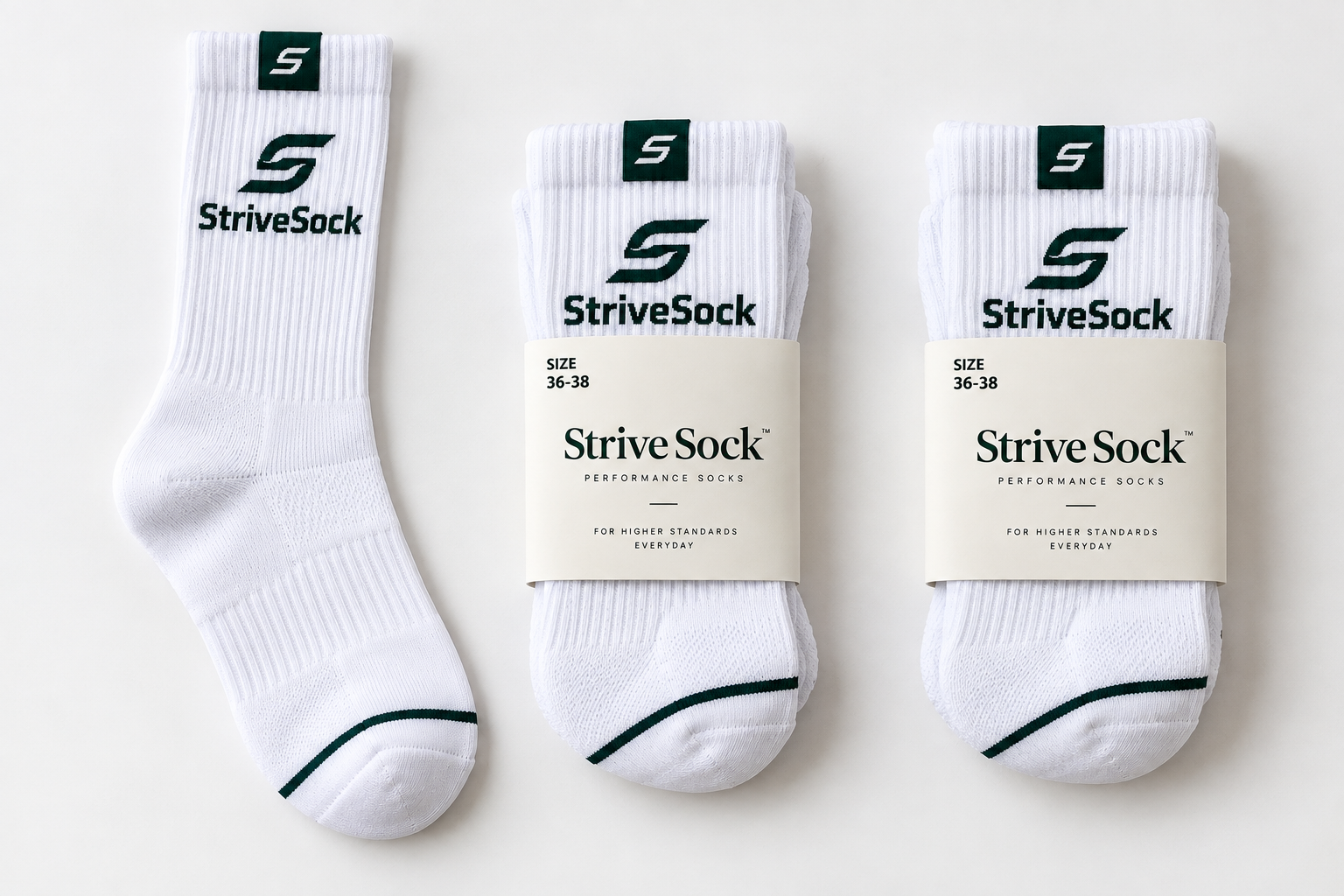
Packaging design and folding need to work together. Before final packaging approval, confirm:
- fold direction
- finished width
- finished height
- logo visibility
- grip visibility
- cuff presentation
For example, if the most important design feature is the side logo, the sock should not be folded in a way that hides it completely.
Packaging for Ecommerce Brands
Ecommerce packaging has different priorities from physical retail. An ecommerce customer may first see the product through a product page, social media or advertising, not through a store shelf.
Therefore, the retail package may not need to do all of the selling by itself. For many ecommerce brands, a simple paper band can be enough. The brand can invest more in product photography, website presentation, shipping experience, inserts and content rather than putting all of the budget into a retail box.
Packaging for Physical Retail
Physical retail creates different requirements. A buyer may need hangability, barcode, visible size, visible color, shelf compatibility and strong front-facing branding.
This may make a hangtag or a specifically designed paper band more appropriate. For premium retail shelving, a box may also make sense. The packaging should be designed around the actual fixture.
Packaging for Wholesale Buyers
If you plan to sell to multiple retailers, packaging becomes even more important. Retail buyers generally want products that are easy to receive, identify, stock, display, scan and reorder.
A beautiful package that is difficult to merchandise can create unnecessary friction. For wholesale-ready products, consistency can matter more than complexity.
Packaging for Grip Socks
Grip socks deserve special consideration because one of the key selling features is the outsole grip. If the packaging completely hides the sole, customers may not see the feature.
Paper Band
Fold the sock so part of the grip remains visible.
Hangtag
Leave most of the sock exposed.
Window Box
Use a cutout to show the grip.
For a functional product, packaging should help customers understand the function, not hide it.
Packaging for Running and Performance Socks
Performance socks often need to communicate cushioning, breathability, arch support, reinforcement and moisture management.
A folded hangtag can work well because it provides information space while leaving much of the product visible. A paper band can also work if the feature list is concise. For highly technical products, use a QR code to move deeper information online rather than putting every specification on the packaging.
Packaging for Lifestyle Socks
Lifestyle socks often sell heavily on color, stripe design, knit graphics and visual identity. A paper band can be particularly effective because it creates a branded retail presentation without hiding the design.
If the graphic itself is the main selling point, keep the packaging visually restrained. The product should still be the hero.
Band vs Hangtag vs Box: Decision Matrix
| Question | Paper Band | Hangtag | Box |
|---|---|---|---|
| Need low packaging complexity? | Yes | Yes | |
| Need compact shipping? | Yes | Yes | |
| Want most of sock visible? | Yes | Best | |
| Need retail hanging? | Possible | Best | Depends |
| Need large storytelling area? | Limited | Medium | Best |
| Need premium gift presentation? | Best | ||
| Need multi-pair packaging? | Limited | Best | |
| Need stronger product protection? | Best | ||
| Best for small first order? | Best | Yes | Depends |
| Best for premium unboxing? | Best |
This is not about choosing a winner. It is about matching the packaging format to the sales channel.
Which Packaging Is Best for a New Sock Brand?
For many new brands, the first order should prioritize product quality, manageable MOQ, clear branding, good photography and practical retail presentation.
That usually means starting with either a paper band when you want clean + branded + compact, or a hangtag when you want visible product + retail display + technical communication.
A custom retail box should have a clear commercial purpose. Do not add one only because it feels more premium.
When Should You Upgrade to a Box?
- the product is already selling
- average retail price supports it
- customers buy the product as a gift
- retail buyers request boxed packaging
- you introduce multi-pair sets
- packaging becomes part of your brand experience
This follows a healthier sequence:
Validate Product -> Build Demand -> Upgrade Packaging
rather than:
Build Expensive Packaging -> Hope the Product Sells
Packaging and Retail Margin
Packaging should be considered when calculating landed product cost.
Sock Cost + Packaging + Packing Labor + Freight = Landed Cost
Then compare that with the intended retail price. A more expensive package can reduce your margin unless it also supports higher perceived value, higher selling price, better conversion or stronger retail placement.
Packaging should earn its place in the cost structure.
Sample the Packaging Too
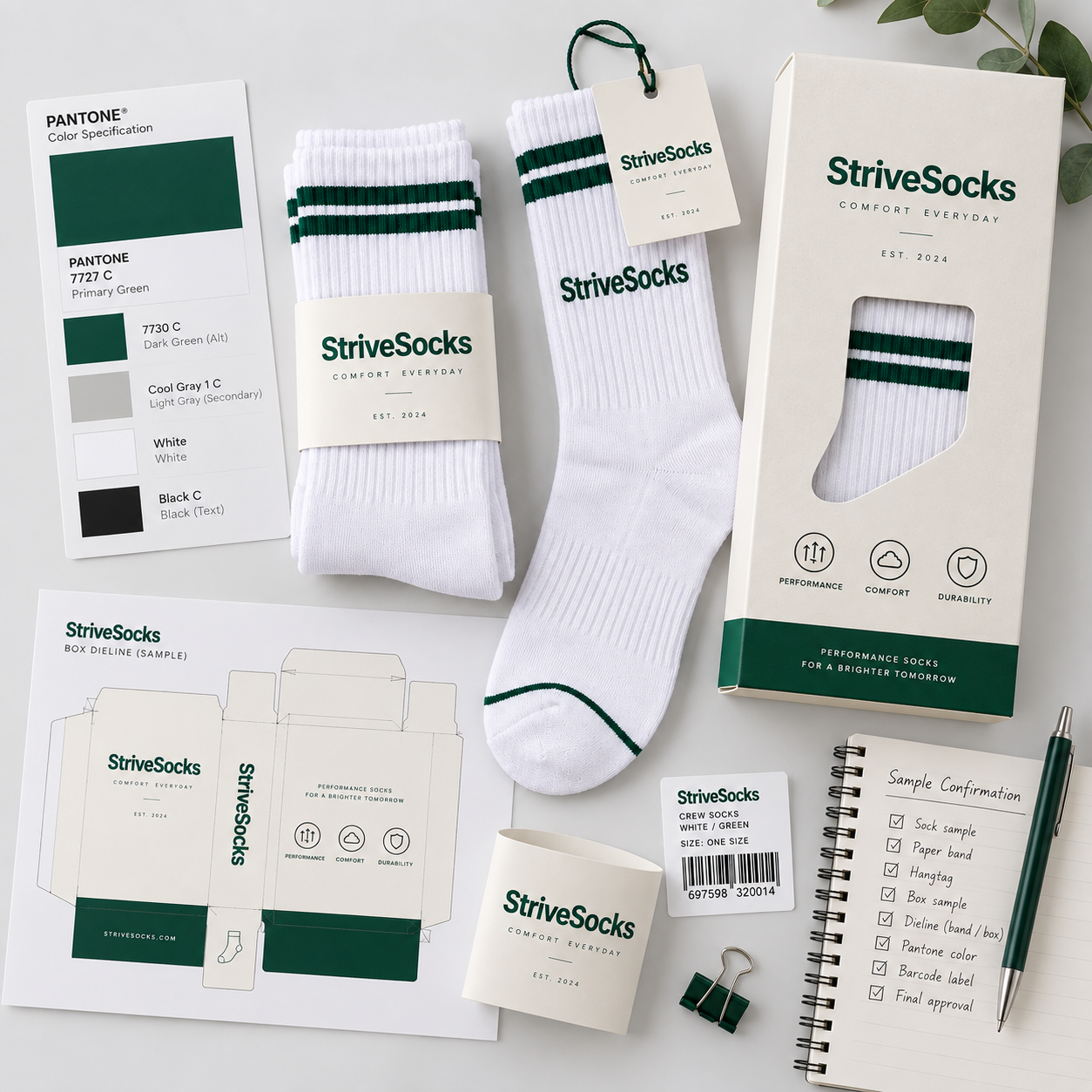
Do not approve packaging only from a digital PDF. Before mass production, check a physical sample if possible.
- paper thickness
- printing
- logo color
- dimensions
- folding
- hang hole
- barcode readability
- sock fit inside packaging
- finished presentation
The packaging may look correct on screen but behave differently when physically assembled.
See this approval step in context: the Retail Crew Sock Packaging case study follows a branded crew sock from artwork and physical sample to its card-and-bag retail presentation.
What Should You Send Your Supplier?
Brand Assets
- Vector logo
- Brand colors
- Fonts if required
Product Information
- Sock style
- Size
- Color
- Material
- Product name
Retail Information
- SKU
- Barcode
- Target market
- Required labeling
Packaging Direction
- Band
- Hangtag
- Box
- Reference images
- Approximate dimensions
Quantity
- Number of pairs
- Number of SKUs
- Expected reorder volume
The clearer the brief, the easier it is to build packaging that works with the actual sock program.
Common Sock Packaging Mistakes
Mistake 1: Designing the Package Before Approving the Sock
Final product dimensions may change.
Mistake 2: Creating Different Packaging for Every SKU
This can multiply packaging MOQ and inventory.
Mistake 3: Choosing a Box Only Because It Looks Premium
A box must support the retail strategy.
Mistake 4: Forgetting Shipping Volume
Bulky packaging can increase freight and storage requirements.
Mistake 5: Hiding the Product
Customers should still understand what they are buying.
Mistake 6: No Clear Size Information
Size should be easy to identify.
Mistake 7: Adding Too Much Text
Packaging is not a full product webpage. Prioritize information.
Mistake 8: Forgetting the Barcode
Retail requirements should be considered before printing.
Mistake 9: Packaging That Does Not Work for Reorders
Keep packaging specifications documented.
Mistake 10: No Physical Packaging Sample
Always check the assembled result before a large run where practical.
A Simple Packaging Strategy for a First Collection
Imagine your first collection contains Essential Crew 01 and Retro Sport 01 in Black and Cream, with S/M and L/XL sizes.
Instead of creating eight different package designs, use one universal paper band.
Same:
- StriveSock-style visual system
- logo position
- brand message
- website
Variable:
- style
- color
- size
- SKU
- barcode
This keeps the collection visually consistent while reducing unnecessary packaging variation.
A More Developed Retail Program
| Product Group | Packaging Format |
|---|---|
| Core Retail | Paper Band |
| Performance | Hangtag |
| Premium Gift / Multi-Pack | Retail Box |
Now the packaging format helps customers understand the product category. That creates an intentional packaging system instead of using one format for everything.
Packaging Should Make Reordering Easier
Keep an approved packaging specification including:
- dieline
- dimensions
- paper specification
- print colors
- artwork
- barcode position
- label size
- folding method
- packing method
Then a repeat order can use the same system. This becomes particularly valuable as a brand grows into more colors, more sizes, more retailers and multiple markets.
Packaging should become a repeatable asset, not a new project every production run.
FAQ: Private Label Sock Packaging
What is the most affordable packaging for private label socks?
Paper bands and hangtags generally involve less material and complexity than retail boxes. The actual cost depends on design, paper, printing, quantity and finishing.
Is a paper band professional enough for a sock brand?
Yes. A well-designed paper band can create a clean, professional and retail-ready presentation while keeping the sock visible.
Are hangtags better for sports socks?
They can be particularly useful for sports and performance products because they leave the product visible and can provide space for technical information. The best choice still depends on the retail format.
Should I use a box for premium socks?
A box can support premium positioning, especially for gifting, multi-packs or higher-priced products. But it should provide enough commercial value to justify the additional cost and shipping volume.
Does custom sock packaging have an MOQ?
Usually, printed packaging has its own production requirements. The packaging MOQ may differ from the sock MOQ. Confirm both before finalizing the order.
Can one packaging design be used for several sock styles?
Yes. A universal design with variable size, SKU, color and barcode information can reduce complexity across a collection.
Should I print the barcode directly on the packaging?
You can, but this may create more packaging variations. For smaller collections, a variable barcode sticker can sometimes offer more flexibility.
When should packaging artwork be finalized?
Ideally after the physical sock sample, size structure and key specifications have been approved. This reduces the risk of printing inaccurate information.
Do I need packaging samples?
A physical packaging sample is recommended, particularly for custom bands, hangtags or boxes. It allows you to review size, fit, printing and overall presentation before mass production.
Choose Packaging Around How You Sell
Packaging should not be selected in isolation. Start with your sales channel.
If you need Simple + compact + branded -> Consider a Paper Band
If you need Retail hanging + maximum product visibility -> Consider a Hangtag
If you need Premium presentation + protection + gifting -> Consider a Retail Box
Then consider MOQ, packaging cost, freight, barcode, size labels and reorder planning.
The strongest packaging is the one that supports both the customer experience and the buying model behind it.
Build Your Private Label Packaging
Before requesting a packaging quotation, prepare:
- Sock style
- Quantity
- Number of SKUs
- Sizes and colors
- Logo artwork
- Barcode requirements
- Preferred packaging format
- Target retail channel
Then packaging can be developed around the actual collection instead of being treated as a decorative add-on.
Match packaging to the category: see how bands, hangtags and boxes can support a private label crew socks collection.
Planning a first range? See how to plan your first sock collection, understand private label socks cost, and start a sock brand with a small first order.
← Back to Blog